

The first morning I fished the OKUMA Voyager, it was 41 degrees on a small lake north of Kalamazoo and my hands were too cold to tie a Palomar knot on the first try. I bought the kit in March for a reason that has nothing to do with how it casts. The whole thing packs into a nylon bag small enough to live under the back seat of my truck, so it goes everywhere with me whether I planned to fish that day or not. That is the test most of my gear fails.
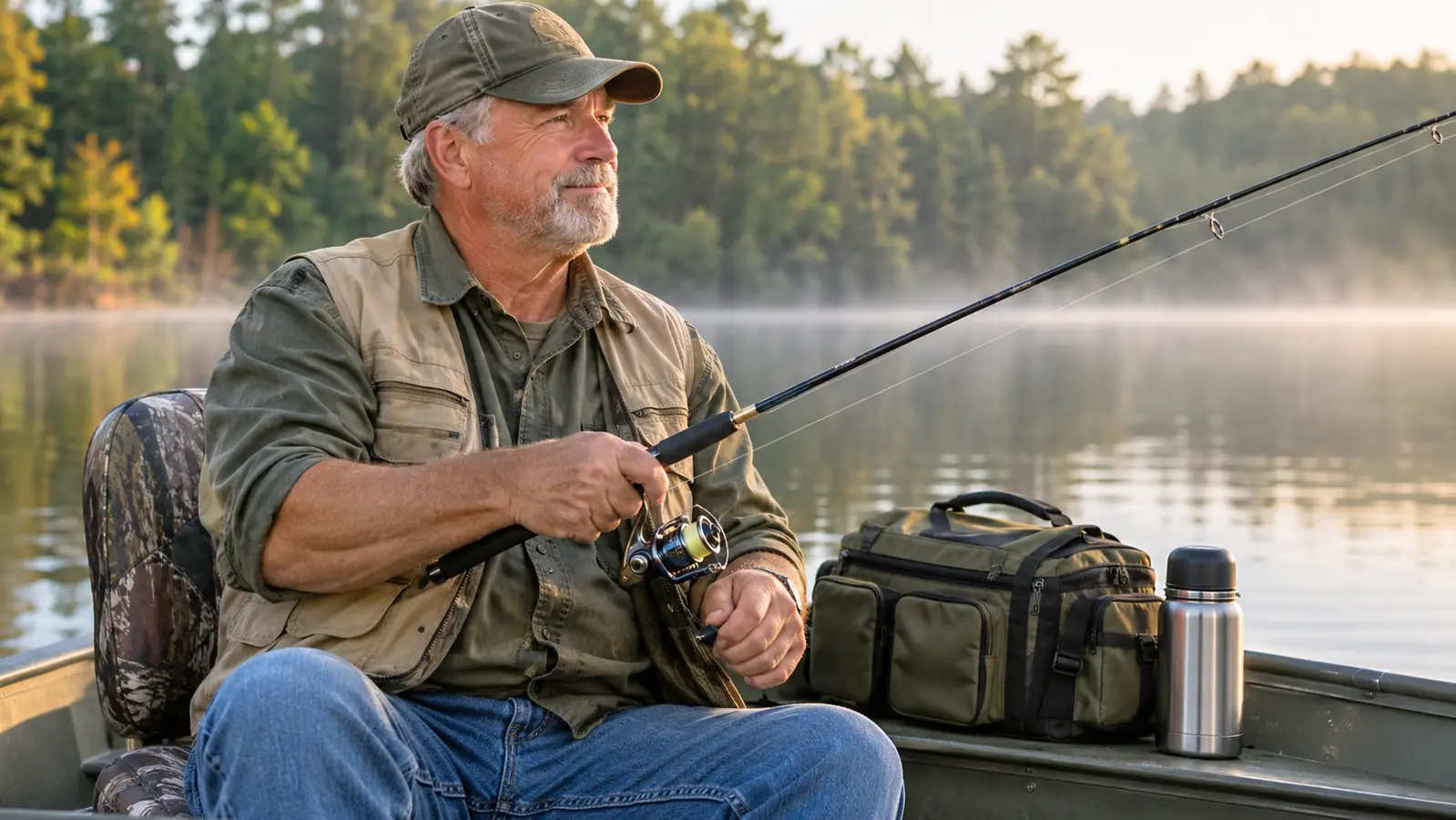
I am 61, retired out of a machine shop, and I fish small water. A 14-foot aluminum jon boat with a trolling motor on most weekends, the river when the smallmouth are moving, and the piers at South Haven in the spring. I do not own a rod locker and I am not going to buy one. What I wanted was a single combo that could handle a bluegill in April and a river smallmouth in July without me having to think about it. After a full season, here is the honest accounting, including the parts I did not like.
The Quick Verdict
A packable spinning combo that casts light baits well and lives in the truck without complaint. It gives up feel to a one-piece rod and it is not built for heavy cover, but on small water and light line it does the job.
Amazon Check Today's Price →The combo that spends more time in the truck than in the garage
Sized for 100 yards of 6-pound line, it handled bluegill, crappie, and river smallmouth through a full season of hard use. Check the current listing and today's price.
Amazon Check Today's Price on Amazon →How I've Used It
April was bluegill. I fished a shallow flat on the north end of a hundred-acre lake where the water warms first, casting a small popper and a 1/16-ounce jig under a float. The combo casts those weights without folding up on the cast, which was my main worry going in. Cheap travel combos usually feel like a wet noodle out there, and you lose the snap that actually makes a light lure go where you pointed it. This one kept enough of that snap to be useful. My first trip was April 6 and the water was still 44 degrees, so I started with a jig under a float and let the wind walk it along the edge of the flat. Nothing for the first hour. I switched to a small popper, worked it slower than I wanted to, and picked up four bluegill between eight and nine inches in the last hour before I quit. The rod did not cost me a single one of those fish, which is more than I could say about the two-piece rod I had been keeping behind the seat.
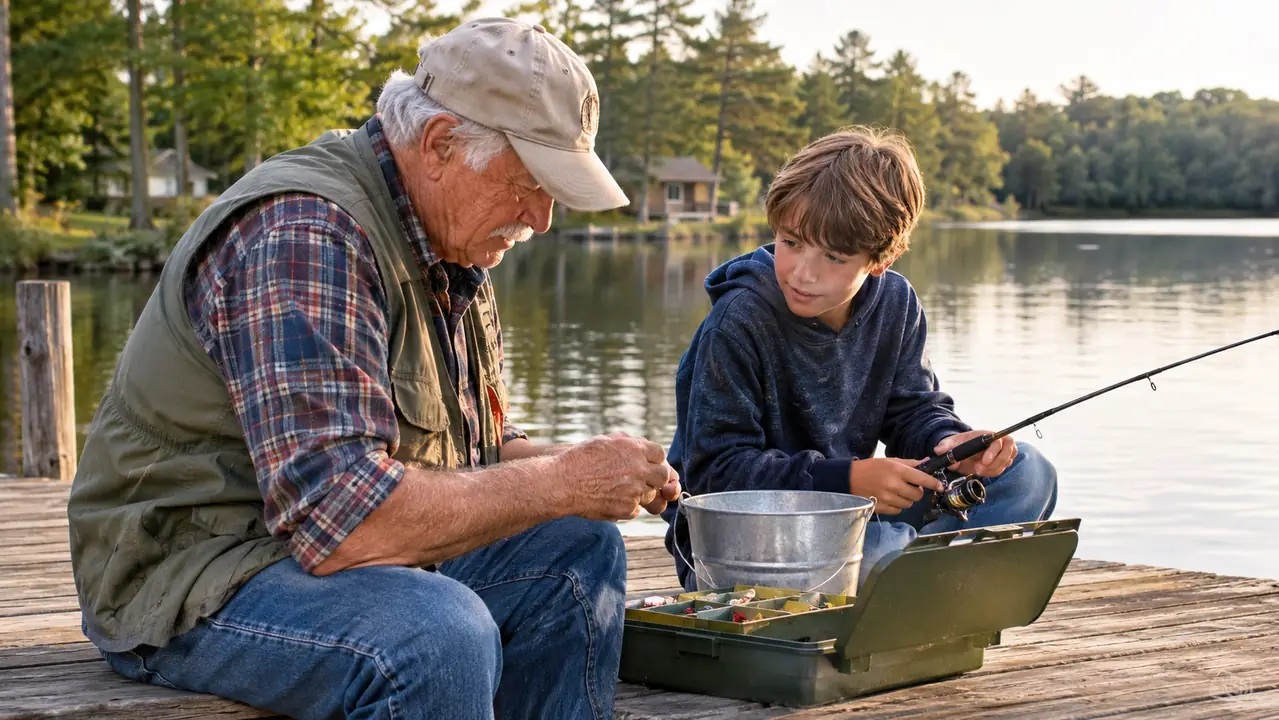
June was bass with my grandson Tyler, who is 12 and fishes like somebody is timing him. He used the Voyager most of that trip because I spent more time netting than casting. He caught his first topwater fish on it, a 14-inch largemouth that came up out of the weeds twice and missed before it finally committed. The rod loaded on the hookset, the drag gave line when the fish ran, and the fish came to the boat. That is all I ask of any combo. He also put a 10-inch crappie in the bucket with it that same afternoon, which I mention only to say the rod is not too much rod for small fish either.
July was the river. I walked a stretch of the St. Joseph with that bag over my shoulder, which is a thing I could not do with my other rods. Smallmouth in current on a three-inch tube, and I lost the first two fish because I was not expecting a packable rod to load that well. The third one stuck. Walking a river bank with a rod in a bag is a different kind of fishing than sitting in a boat, and it is the reason I kept the kit instead of selling it in August. I hiked in about a half mile to a bend I like, waded to my knees, and fished the seam behind a gravel bar. The bag rode on my shoulder the whole way and I never once thought about it. If you have ever carried a two-piece rod through buckthorn, you know why that matters.
September and October were crappie and the piers. Vertical jigging over brush from the boat, then a few mornings at South Haven casting off the wall for whatever was moving through. The kit rode in the truck bed, got rained on twice, and got knocked off the tailgate once. I have not been gentle with it. On the pier I fished a 1/8-ounce spoon and a small swim bait, and both went out far enough to reach the second set of pilings on a south wind. I did not catch anything worth a photograph, but I caught fish, and the rod did not care that it had spent the previous night in the truck.
What Is Actually in the Bag
Here is what the listing says, because I would rather give you the numbers than my impression of them. It is a rod and reel combo that weighs 0.57 kg, about a pound and a quarter, so you forget you packed it. It comes with a nylon travel bag, a shock-resistant foam insert, and an adjustable shoulder strap. The reel is sized for 100 yards of 6-pound line. The model number on the box is VS-605-20, and that is what you will see on the listing. OKUMA lists the recommended species as panfish, bass, and trout, and that matches exactly how I used it.
The foam insert is the part I underestimated. Everything sits in its own spot and nothing rattles around, so after a season of the bag sliding under the truck seat and riding in the boat, nothing has rubbed through and nothing has bent. The strap adjusts long enough to carry over a jacket. The bag has been to the pier, the boat, and the back of the truck without complaint. I did check the foam in August after the tailgate drop, and there was a scuff on one corner and nothing else. The zipper still pulls clean. That sounds like a low bar. It is not, at this price bracket.
I spooled it with 6-pound monofilament because that is what the reel is sized for, and 6-pound is right for the panfish and small bass I chase. I tried 8-pound for two trips in June, mostly out of habit, and I did not like it. The heavier line was more than the reel wanted and it came off the spool in loose loops on the second or third cast each morning. I fished it out, cut it back to 6-pound, and left it there for the rest of the season. If you are planning to chase bigger fish with it, you are asking the combo to do something it was not built for. I will get to that in a minute.
How It Fished
Casting is where a packable rod usually gives itself away, and this one does not. A 1/16-ounce jig under a float, a small popper, a 1/8-ounce inline spinner, all of it goes out there without me having to overpower the cast. That matters on small water, where most of my fishing is a short flip to a weed edge rather than a bomb cast at the horizon. I place lures with it instead of just throwing them. The one place I noticed the difference was casting into a stiff headwind in October off the pier, where I had to aim a good two feet higher than I would with a stiffer rod. Once I made that adjustment the lure landed where I wanted.
Sensitivity through the grip is average. I feel a bluegill tap and I feel a jig tick bottom in eight feet of water, but I am not going to pretend I can tell a rock from a shell down there. If feel is the thing you care most about, you want a one-piece rod and you already know it. No packable rod wins that argument.
The drag did what I asked. A 14-inch bass on 6-pound line is not a big fight, but it is enough to show you whether a drag stutters, and this one did not. It gave line smooth and it picked up smooth. A river smallmouth that ran into current did the same thing to it, and got the same result. I set the drag by hand at the boat ramp the way I always do, pulling line off the spool until it came free with steady resistance, and I did not have to touch it again all season. That is the whole review of a drag, honestly. Set it once, forget it, and it never surprises you.
The one morning it struggled was the windy one. Twenty miles an hour out of the southwest on open water, and casting a light popper into that is a losing argument with any rod, not just this one. I tied on a heavier spinner and it handled that fine, but the combo is happiest when the wind is under ten and the baits are light. That is not a knock on it. That is just what it is.
Three Things That Surprised Me
The first is how little I thought about it. By the third trip the Voyager had stopped being a travel rod I was testing and had become the rod I reached for, which is the highest thing I can say about anything at this level. Gear that makes you think about the gear is gear that is costing you fish. I noticed it in June, sitting on the water at 5:40 in the morning, when I tied on a jig in the dark without turning on a light and did not have to think about the rod at all.
The second is the knock-around durability. Travel kits are usually the first thing to break in my truck, and the bag and the foam insert have held up better than the rod sock on a rod that cost me more. I figured I would be replacing this by August. I am not. The bag has one scuff on a corner from the tailgate drop and that is the entire damage report for the season.
The third is small but it matters. It does not rattle. Some budget combos have a wiggle and a click you feel on every cast, and it makes you fish carefully, which is the wrong way to fish. This one is quiet in the hand. Quiet gear is gear you trust, and trust is most of what you need on a small lake at six in the morning.
The Trade-offs
Here are the honest limitations. A travel rod gives up something to pack small, and what this one gives up is feel and a little backbone. I did not trust it on a hookset until the third trip out. If you are used to a stiff one-piece rod, the first hour with this will feel light and vague in your hand, and that feeling is real, not imagination. It took me a full morning of missed bluegill before I stopped trying to set the hook like I was swinging a broom.
The OKUMA Voyager is a freshwater kit, listed for panfish, bass, and trout, and I would keep it there. I would not fish it into heavy cover after a five-pound largemouth, and I would not stand on the pier expecting to cast a big spoon into a crowd. It is a light-line tool. Fish within the 6-pound line the reel is sized for and it is fine. Push past that and the failure is yours, not the rod's.
Packing it up takes a minute. That is not a problem, it is just a thing to know before you buy. If you move spots every twenty minutes you will leave it assembled and lay it in the boat. If you hike in somewhere, the bag earns its keep in a way a two-piece rod never will.
What I'd Look At Instead
If you want one rod that lives in the boat and never gets packed away, a standard two-piece rod like the Ugly Stik GX2 will give you more backbone for similar money and you will never handle a bag. If you want the best panfish feel available, a dedicated one-piece ultralight is the answer, and it will not travel with you.
I kept the Voyager because none of those fit under the truck seat. That is the whole decision. Buy the tool that fits how you actually fish, not the one that sounds best at the counter.
What I Liked
- Packs into a nylon bag that fits under a truck seat
- Casts 1/16-ounce jigs and small poppers without folding up
- Drag is smooth and consistent on 6-pound line
- Foam insert keeps everything from rattling around
- Survived a full season of rain, tailgates, and truck beds
Where It Falls Short
- Average sensitivity through the grip
- Not built for heavy cover or big fish
- Light baits only when the wind is up
- You give up feel compared to a one-piece rod
By the third trip it had stopped being a travel rod I was testing and had become the rod I reach for. Gear that makes you think about the gear is gear that is costing you fish.
Who This Is For
The weekend angler who fishes small water and wants one combo that stays in the truck. The person who takes a rod along on a family trip and does not want to explain a rod tube in the back seat. Grandparents fishing with kids, which is most of my summer anymore. If your water is a pond, a hundred-acre lake, a river bend, or a pier, and your fish run from bluegill up to a couple pounds of bass, the OKUMA Voyager does the job and it does it without any fuss.
Who Should Skip It
If you fish big water or heavy cover, skip it. If you need to feel a jig tick a shell in twenty feet of water, skip it and buy a one-piece. If you already own a decent spinning rod and the only real problem is that it does not fit in your truck, you do not need a new combo. You need to clean out the truck.
One combo that earns the space under the seat
A 4.3-star average across roughly 1,750 ratings, and a full season of my own use behind it. Check the current listing and today's price before your next trip.
Amazon Check Today's Price on Amazon →