
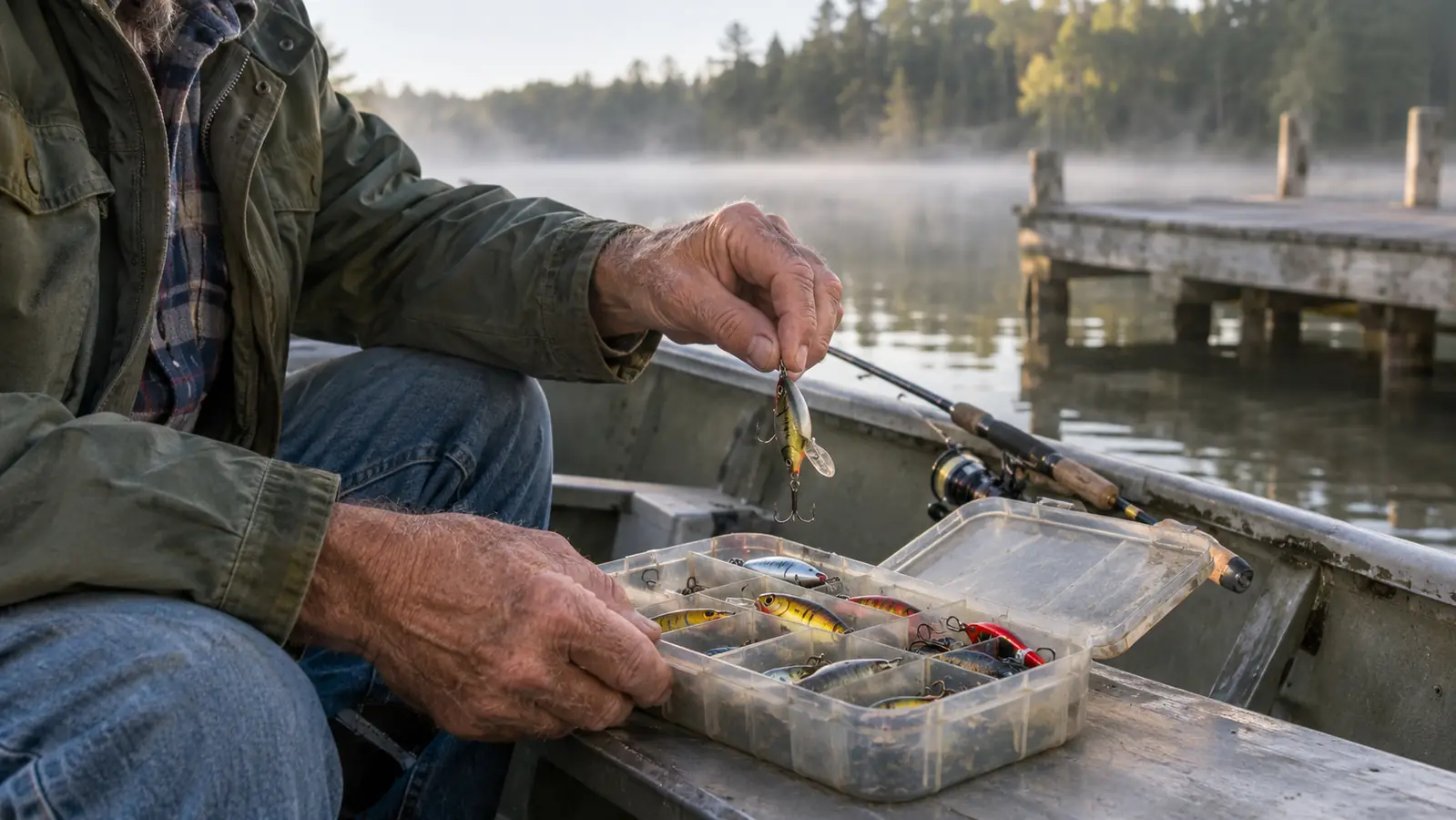
My tackle used to live in one big box with a lid that weighed more than my trolling motor battery. Crappie jigs, bass plastics, hooks, sinkers, a spare spool and three lures I still cannot name, all in the same pile. Half of every trip was digging. So in April I bought a two-pack of KastKing Utility Tackle Boxes and spent the season carrying trays instead of one anchor. This is not a boat review and it is not a tournament report. It is what happened over about five months on small inland lakes outside Kalamazoo, a few river trips for smallmouth and two cold mornings on the South Haven pier. That is enough time for a plastic box to show you what it is.
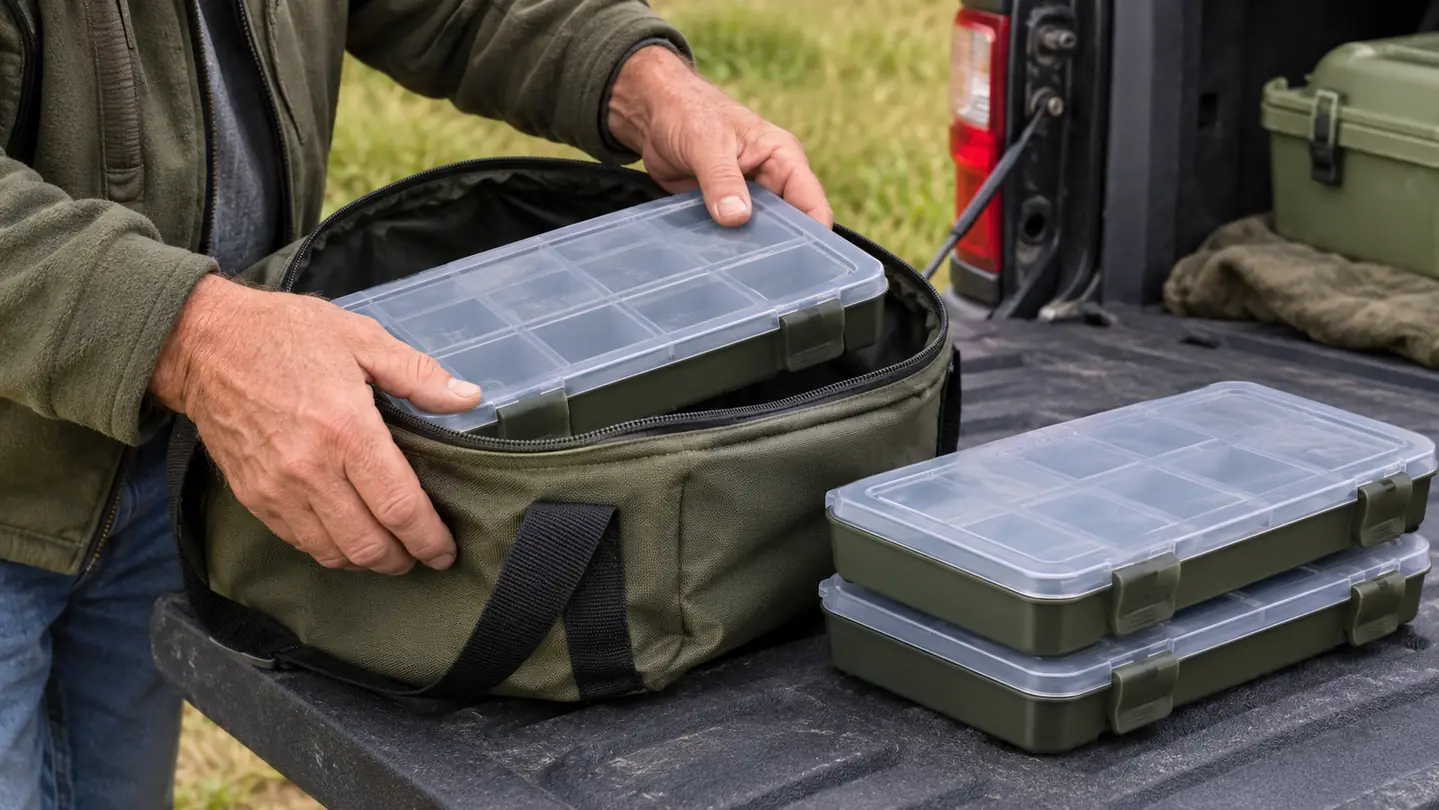
What arrived was two shallow trays, each listed at 10.8 by 7.25 by 1.65 inches, plastic, rated waterproof by the listing, with up to 18 compartments per tray once the pre-cut dividers come out. I had measured the inside of my soft bag before ordering, because I have bought a tackle box that did not fit a bag before and I did not want to repeat it. Ten and eight tenths long by seven and a quarter wide slipped in with maybe a quarter inch of slack on each side, which is what you want. The same line comes in a deeper, longer 3700 size, and both are built to be interchangeable with standard tackle bags. I ordered the smaller ones because a shallow tray lets me see everything at once, and because deep trays turn into a rummage bin the moment you stack two baits on top of each other. If you throw big swimbaits or musky baits, you want the 3700. For bluegill, crappie and the size of bass plastics I fish, the 3600 is the right depth.
The Quick Verdict
Five months of honest use and the trays still hold. Buy them if you want to see your whole lure selection without unpacking it. Skip them if you refuse to sort once.
Amazon Check Today's Price →Two shallow trays and 18 compartments each. Check today's price before your next trip.
The 3600 trays are the size that fits the bag you already own. The 3700 is there if your baits run long.
Amazon Check Today's Price on Amazon →How I've Used It
A normal Saturday for me is a 14-foot aluminum jon boat with a small trolling motor, launched before the wind picks up and back on the trailer by one. Tyler, my grandson, comes along on some summer weekends, and he is the reason I finally organized anything. A 12-year-old who is bored will dig through your tackle whether you want him to or not. The first trip with the trays was the last Saturday in April, on a 90-acre lake east of Kalamazoo, water still in the low fifties and the bass not doing much of anything. I set the three trays up the night before on a folding table in the garage: one for panfish jigs and small spinners, one for bass plastics and hooks, and one for terminal tackle. They ride in the soft bag behind my seat. When the boat is on the trailer, the bag goes on the tailgate and the trays come out flat, which is the entire point of a tray. That first morning I opened the bag three times and never once had to dig. Sounds like a small thing. It was not.
On the water the routine is simple. Open the bag, pull the tray I need, set it on the bench beside me, tie on, put it back. The second tray stays in the bag unless the first pattern dies. A typical morning is a jig under a bobber for panfish until the sun is up, then plastics along the weed edge once the light gets flat, and that switch used to cost me five minutes of digging through a box. Now it costs me the time it takes to lift one tray and drop another. That sounds trivial until you remember what the one big box was like. I used to unclip the whole thing, set it on a wet floor and hope nobody's wake tipped it over. With trays, the worst case is one tray of jigs on the deck instead of my entire inventory.
I also used them out of the truck bed and off the pier. On the South Haven pier in October, the trays went into a small cooler bag because the wind was pushing spray over the rail and I wanted to see whether the waterproof rating meant anything at all. More on that below. The short version is that these boxes got carried, dropped on gravel, rained on and left in a hot truck bed in July. I did not baby them, and that was deliberate.
What the Pre-Cut Dividers Actually Do
The trays ship with pre-cut dividers, and the listing puts the range at 3 to 18 compartments per tray. In practice that means you pull dividers out to make long slots for stickbaits, or leave them all in for a grid of small cells for hooks and split shot. I left one tray mostly full of dividers for terminal tackle and pulled most of them from the plastics tray so a four-inch worm lies straight instead of curling into a U. Getting there took a Sunday afternoon on a folding table in the garage with the old box dumped out beside me, and my first pass was wrong. I built the plastics tray with narrow slots, discovered that a four-inch stickbait only fits a narrow slot if you lay it at an angle, and it still popped the lid. So I pulled the dividers back out and widened six of the slots. Second pass took about ten minutes. That is the difference between a box you organize once and a box that stays organized.
Two things to know. First, the dividers are plastic and they will not survive being used as a scraper or a pry bar. I broke one early by shoving a stubborn jig out of a slot with my thumb. My fault, and I put it back in service. Second, when you pull dividers out, the slot you create runs the full length of the tray, so small items in a long slot will slide. I solved that by keeping long slots for long baits only and leaving the small stuff in the full grid.
The 18 compartment number is a maximum, not a default. If you want a hook tray with 18 little cells, you can have exactly that, and it works well for treble hooks and split shot. If you want eight wide slots for crankbaits, you can have that instead. That flexibility is the reason I stopped carrying three separate specialty boxes. One tray covers panfish, one covers bass and the third is terminal tackle for both.
Waterproof, and What That Word Is Worth on a Jon Boat
The listing rates water resistance as waterproof. I am careful with that word. A closed plastic tray is not a dry bag and it is not going to survive being submerged, and I did not test that because I did not want to lose a tray of jigs proving a point. What I can tell you is that these trays sat through a twenty-minute rain squall on a small lake near Paw Paw with the bag open and the contents came out dry. That was mid-June. The sky went from gray to black in about ten minutes while we were on the west side of the lake, and I made the call to keep fishing rather than run for the ramp. Water beaded on top and ran off. Spray coming over the pier rail did the same thing.
Where I would not trust the claim is a tray sitting in the bottom of the boat with an inch of standing water in it. I did that by accident once with a tray left out overnight, and while the tackle inside was fine, water had worked into the seams and I dried it in the garage for a day before it went back in the bag. The rating is about splashes and rain, not about floating. Treat it that way and you will be happy with it.
Living With 18 Compartments
Here is the honest downside of tray style, and it has nothing to do with KastKing specifically. Small compartments mean more decisions. When every jig has its own cell, you can spend the first ten minutes of a trip deciding where things go instead of fishing. I fought that for about a month. For the first three trips I re-sorted the jig tray at the ramp before launching, then again after lunch, then once more in the garage that night. That is not organizing, that is fidgeting. What fixed it was deciding once, by bait type, and then refusing to reorganize on the water. Trays reward a system. If you are the sort of person who dumps everything into one compartment and sorts it later, trays will slow you down and you will resent them.
The other thing I noticed is weight. The listing recommends a maximum of 3 pounds per tray, and I would respect that number. A tray packed with lead sinkers and a couple of heavy spinnerbaits gets there faster than you think, and a loaded tray sags a soft bag. I keep sinkers in one corner of the terminal tray and spread the rest out. It is not a rule I would have landed on myself, but it matches what the tray feels like when you pick it up full.
How They Held Up Over a Season
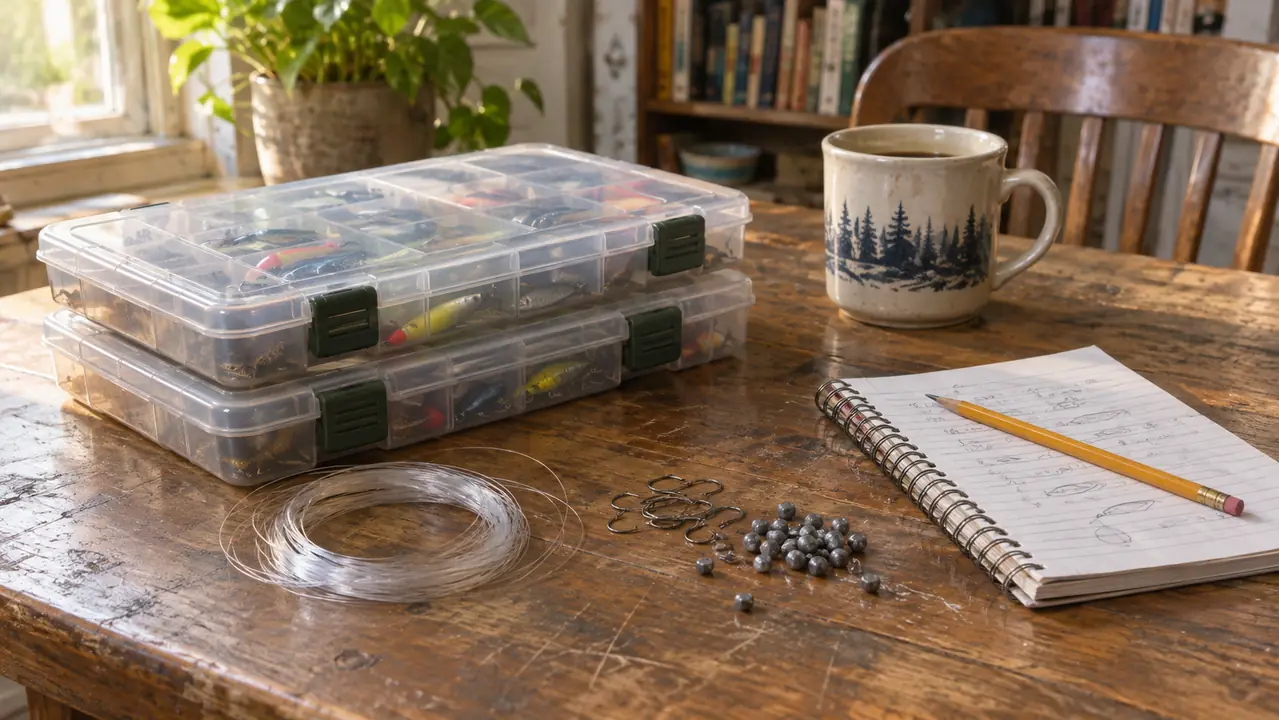
Five months in, the trays look used. The corners are scuffed from being set down on concrete and gravel, and one tray picked up a small crack near a corner when it came off the boat ramp onto the pavement. That was my own carelessness on a windy morning in July. I had the bag on the tailgate, turned around for a strap, and the tray went off the edge. It landed on a corner, and the corner is where the hairline crack lives now. It has not spread, the tray still holds jigs, and I have not done anything about it. Nothing else has come apart. The compartments still hold, the dividers still seat where they are supposed to, and the trays still fit the bag they were bought for. The only real failure was the divider I broke myself. For context, the one big box these replaced had a lid that gave out in year two.
There is a small annoyance I will mention because it is real and not KastKing's fault. When trays are stacked in a bag and you pull the bottom one, the one above it comes along for the ride. That is true of every tray I have owned. The fix is to pull from the top or use a bag with slots. Tyler learned it the hard way by dumping a tray of crappie jigs into the bilge, and we spent ten minutes picking jigs out of the rib rivets.
What I Liked
- Shallow 3600 tray lets you see the whole lure selection without unpacking anything
- Pre-cut dividers adjust from 3 up to 18 compartments so one tray covers several bait types
- Rated waterproof and it held up to real rain and pier spray
- Interchangeable with standard tackle bags, so it fits gear you already own
- Two-pack means a working tray plus a backup or a second setup
Where It Falls Short
- Small compartments tempt you into reorganizing instead of fishing
- Pulling dividers creates full-length slots where small items slide
- The 3 pound recommendation is easy to blow past with sinkers and heavy baits
- One divider snapped when I used it as a pry bar, which is on me
- Not submersible, so do not treat waterproof as floatproof
Five months, one rain squall, a pier, a hot truck bed and a drop on the boat ramp. The trays still hold, and the only divider I broke was my own fault.
Who This Is For
This is for the angler who carries more than one style of bait and is tired of unpacking a big box to find a jig. If you fish panfish and bass out of a small boat or from shore, two shallow trays will cover almost everything you throw in a session. It suits anyone who already owns a soft tackle bag, because the trays drop straight in and are built to be interchangeable with standard bags. It also suits a boat with limited flat space, since a tray on the bench is easier to manage than a box on the floor. And it suits anyone fishing with a kid, because handing a 12-year-old his own tray is a lot better than handing him your whole box. If you are on the fence about size, measure your bag's inside length first. That one number settles it faster than any review will.
Who Should Skip It
Skip these if you throw long baits. Big swimbaits, musky cranks and anything over about seven inches will not lie flat in a shallow tray, and the slot you create by pulling dividers just gives it room to slide. Get the deeper 3700 or a box built for long baits. Skip them if you genuinely do not sort. A tray with 18 cells is a worse experience than one big compartment for someone who fishes by grabbing a handful and going. And skip them if you want one container for everything, including pliers, line and sunscreen, because trays are for tackle only and you will still need the bag. If you are weighing tray storage against a single large box, that is a different argument and worth reading on its own before you spend anything.
If your bag is already the right size, these trays are the piece you are missing.
Two 3600 trays, pre-cut dividers, up to 18 compartments each. Rated waterproof and built to fit standard tackle bags.
Amazon Check Today's Price on Amazon →