

The first thing worth knowing about the OKUMA Voyager travel kit is that it is a travel rod first and a fishing rod second. That sounds like splitting hairs until you have owned one. A rod that lives in the boat gets judged on how it casts and how it feels when a bass loads it up. A rod that lives in a bag gets judged on whether it survives getting there. The Voyager is built for the second job, and it does that job better than most anything I have kept around. It just asks you to give up a little on the first.
I have fished southwest Michigan most of my life and seriously since I retired from the machine shop. Small inland lakes for bass and bluegill, the river for smallmouth, the piers at South Haven when the crowds thin out in the fall. Most of it happens out of a 14-foot aluminum jon boat I haul on an old pickup. My grandson Tyler rides along some summer weekends and mostly wants to catch bluegill, which is a good thing to want. I bought the Voyager because I wanted one rod I could leave in the truck without feeling foolish about it. What follows is what I actually found, including the parts that got on my nerves.
The Quick Verdict
A genuinely packable freshwater kit that fishes well enough for panfish, bass and trout, provided you accept that a travel rod feels like a travel rod. The bag and foam insert are the best part of the purchase, and that is meant as a compliment.
Amazon Check Today's Price →One rod, one bag, one less thing to load in the morning
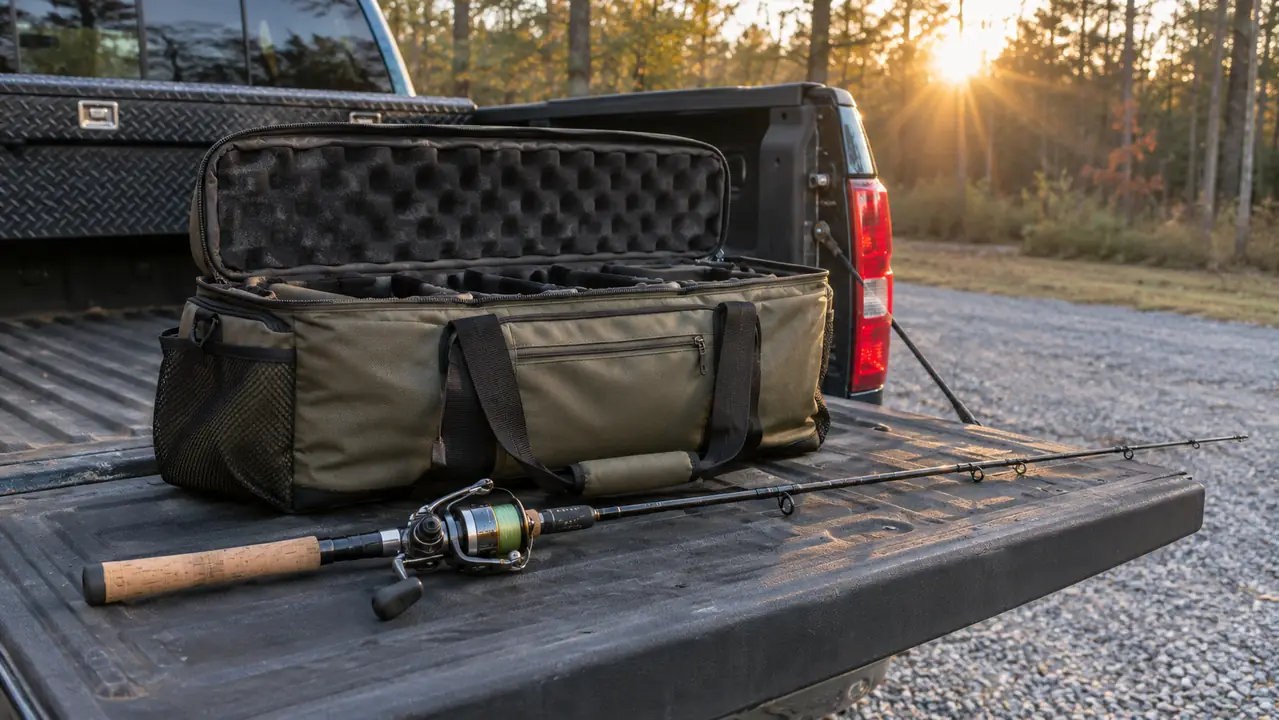
The Voyager lives in its own nylon bag with a foam insert holding everything in place, so it can stay behind the seat until you need it. Check today's price on Amazon.
Amazon Check Today's Price on Amazon →What the OKUMA Voyager Kit Actually Is
Strip away the marketing and you get a spinning rod and reel in a soft nylon travel bag. The bag has a shock-resistant foam insert the rod presses into, plus an adjustable shoulder strap. The whole kit is listed at 0.57 kg, which works out to about a pound and a quarter. That number matters more than it sounds, because the point of a kit like this is that you stop noticing it is there. The size is listed as 100 yards of 6-pound line, which is the right ballpark for the fish this rod is meant for: panfish, bass and trout, per the manufacturer's own recommendation.
The materials are listed as synthetic, and the kit is a rod and reel combo rather than a rod you match to your own reel. That last detail is the whole argument in miniature. You are not buying a rod. You are buying a decision that has already been made for you, in a bag, at a weight that will not pull on your shoulder walking a quarter mile down to the water. For a truck rod, that is a fair trade. For a rod you plan to fish hard four days a week, it is a trade you will feel.
What Nobody Tells You Before You Buy
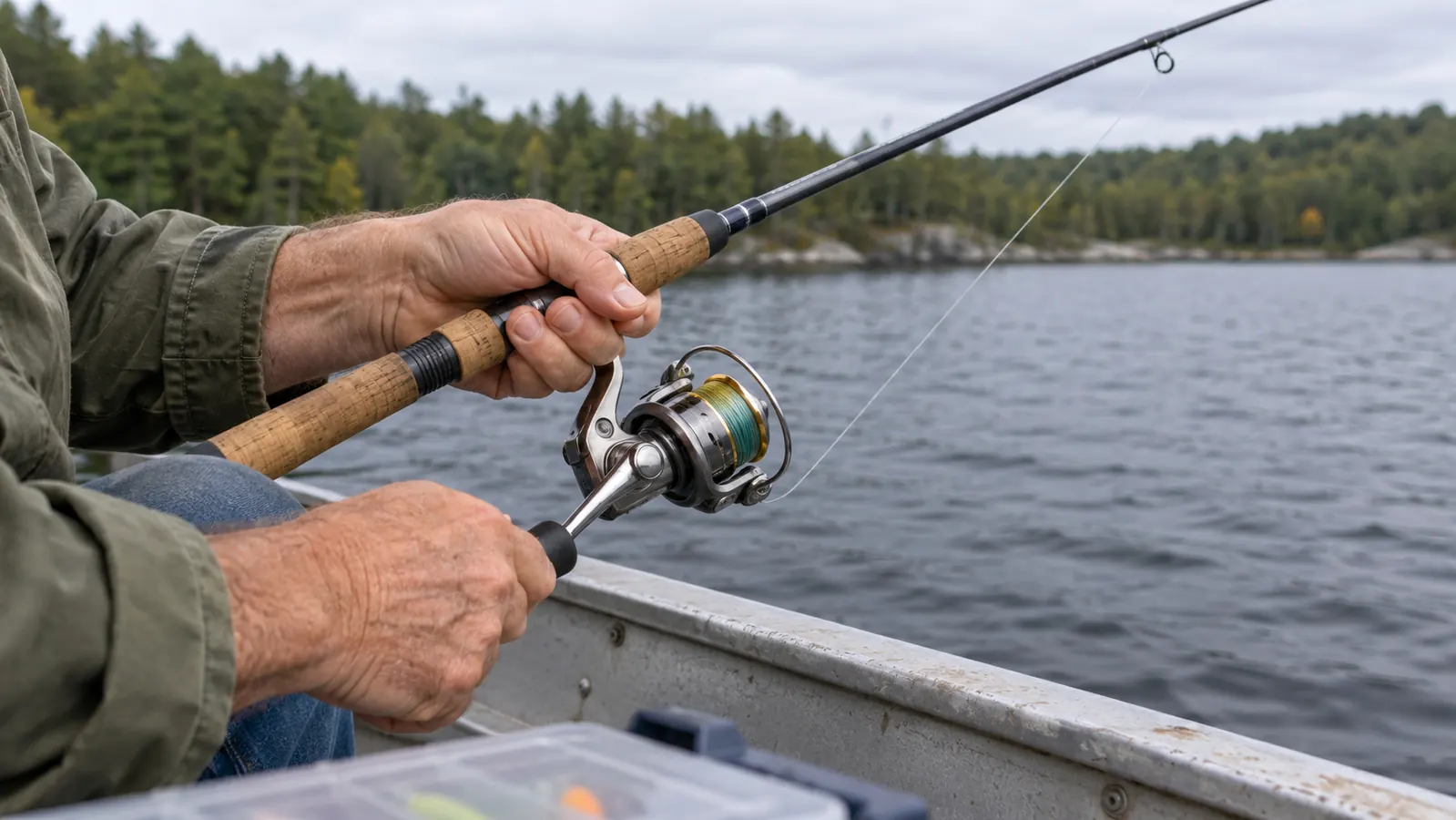
Here is the part the listings leave out. A travel rod is a stack of compromises dressed up as convenience, and the convenience is real but so are the compromises. Any rod that comes apart and goes back together is going to feel different in your hand than a one-piece of the same length. You will notice it most on a slow day when you are working a soft plastic and waiting for a tick that does not come. Sensitivity is the first thing you give up and the last thing you get back.
Before this kit I tried the lazy version of the same idea. I left an older two-piece rod assembled and lying in the bed of the truck under a folded tarp, figuring I would grab it whenever the mood hit. It lasted about six weeks. The heat and the weight of that tarp put a slight bend in the tip that never came out, and then a cooler slid into it on the way home from the ramp and finished the job. That is exactly the failure the Voyager's foam insert is built to prevent, and having paid for the lesson once, I noticed the difference the first time I zipped the bag shut. A case you can close is not a gimmick. It is the reason the rod is still straight.
The second thing nobody mentions is that the reel is the part you will think about replacing first. That is not a knock on OKUMA so much as it is the nature of a combo. When a manufacturer builds a rod and a reel to hit a package weight and a package cost, the rod gets most of the attention and the reel gets what is left. Mine has done its job on bluegill and small bass without complaint. It has also never once made me forget I was fishing a kit rather than a setup I built myself. If you fish thirty days a season, you will feel that. If you fish six, you probably will not.
Sensitivity is the first thing you give up with a travel rod and the last thing you get back. The question is whether you were going to feel those bites anyway.
The third thing is the one that surprised me. The weight of the kit, that pound and a quarter, is not where you think it is. The bag and the foam insert carry a good chunk of it, so the rod and reel in your hand feel lighter than the number suggests. That is a good surprise. It also means the bag is doing real structural work rather than sitting in a closet, which is why I stopped treating it like packaging and started treating it like part of the gear.
Three Trips, and What Each One Showed
The first trip was a small lake north of Kalamazoo in late May, water still cool, bluegill on beds in the shallows. Tyler came along and fished a bobber and a worm off the bow while I worked the Voyager along the weed edge with a small jig. It cast cleanly enough at the distances that matter on a lake that size, call it twenty to thirty feet, and the tip loaded predictably on a light lure. I caught bluegill until I got bored of bluegill, which takes a while. Nothing about the rod got in the way. That is the highest praise I can give a piece of gear on a panfish morning.
The second trip was the river for smallmouth, and this is where the honest part starts. The river asks for longer casts and a firmer hookset, and a travel rod asks you to be a little more deliberate about both. I lost two fish on a tube jig that I am fairly sure I would have stuck with my one-piece. Not certain. Fairly sure. The rod flexes into the middle more than I like on a sweep hookset, and when you are standing in current you do not get a second chance to lean into it.
What I changed was simple. I stopped sweeping the rod sideways the way I do with a one-piece and started setting straight up with a shorter, sharper motion, elbows in close to my ribs. That got the tip loading against the fish instead of folding away from it. The next smallmouth, a fish of maybe fourteen inches, came up and stayed pinned all the way to the net. I am not going to tell you the rod turned into something it is not. I am telling you that twenty minutes of paying attention fixed most of what had annoyed me, and that is a reasonable thing to ask of a rod you paid travel-rod money for.
The third trip was the pier at South Haven in October, which is not really what this kit is for but is exactly the sort of trip where a rod behind the truck seat earns its keep. I threw a spoon for an hour and a half in a cold wind and did not hook anything worth writing down. What I did notice is that the kit went into the bag wet, came out of the bag dry two days later, and did not rattle around or take a set. For a rod that spends most of its life stored rather than fishing, that is the test that matters.
The Bag Does More Work Than You Think
I have owned travel rods where the case was an afterthought, a thin sleeve that protected the rod from nothing except dust. This is not that. The nylon bag is soft-sided but structured, the foam insert holds the rod where you put it, and the adjustable shoulder strap means you can carry it hands-free down a bank with a tackle box in the other hand. Walking a steep access path with both hands full is where you find out whether a travel kit was designed by someone who has done it.
I measured the bag against the space behind the seat of the truck, because that is where it was going to live whether I liked it or not. It fits with room to spare and does not foul the jack or the tie-downs I keep back there. The shoulder strap adjusts far enough that I can sling it across my chest when I am carrying the tackle box in one hand and a bucket in the other, which is how the walk down to the water usually goes. On the steep access at one of the lakes I fish, that matters. Two trips up and down that hill is a younger man's game.
The foam insert is the detail I would not have thought to care about and now would not buy without. It keeps the rod from shifting, and shifting is what breaks travel rods. Not the fish, not the cast, not the hookset. The ride home in a truck bed with a cooler sliding into it. I have had that happen to a rod that cost me more than this kit, and I did not enjoy the lesson.
Where It Falls Short
The reel is adequate and no more than adequate. It will handle panfish and schoolie bass all day. It will not make you happy if you spend your season casting to largemouth in heavy cover, and the kit is not built for that anyway. The recommended uses are panfish, bass and trout, and the line size is 100 yards of 6-pound. Take those numbers seriously. This is a light freshwater kit, and if you push it past that you will be pushing a reel that was never asked to do the work.
I run six-pound mono on mine because that is the size the kit is built around, and I have not tried to push it heavier for long. One river trip I bumped up to eight-pound to see whether the extra margin was worth it, and I did not care for how the rod loaded with it. The cast felt sluggish and the tip lost the crisp little snap that makes this thing pleasant on light lures. So I went back to six and stayed there. That is not a defect exactly. It is the kit telling you what it is. When the spec sheet and the feel of the rod agree with each other, believe them both.
The rod is not a distance rod. On a lake where the fish are twenty feet out, you will never notice. On a big body of water where you need to reach a break line sixty feet away into a headwind, you will notice constantly. I fish small water almost exclusively, so this costs me little. If your season is built around long casts over open water, this kit will feel like a limitation rather than a convenience, and you should buy something else.
The last shortfall is the one I keep circling back to: it does not feel like a rod you chose. There is a satisfaction in a rod you picked off the rack, matched to a reel you picked separately, spooled with a line you have opinions about. The Voyager gives you none of that. It gives you a kit that works, in a bag, for a price that reflects the fact that you are not getting a custom setup. Some days that is exactly what you want. Some days it is not.
What I Liked
- Packs into its own nylon bag with a foam insert that actually holds the rod in place
- Whole kit weighs 0.57 kg, light enough to carry by the strap with your hands full
- Adjustable shoulder strap makes the walk down to the water a one-trip job
- Fishes cleanly at the distances that matter on small inland lakes
- Line size of 100 yards of 6-pound suits the panfish, bass and trout work the kit is recommended for
- Stored wet and pulled out dry two days later without rattling or taking a set
Where It Falls Short
- Loses sensitivity compared with a one-piece rod of the same length
- Reel is the weak link in the combo and the first thing you will want to upgrade
- Not a distance rod, and it shows in wind on open water
- Softer mid-section makes a firm river hookset feel less certain
- You give up the satisfaction of a setup you chose piece by piece
Who This Is For
This kit is for the angler who wants one rod that can live in the truck, the boat locker, or the closet and be ready without maintenance drama. It suits the weekend fisherman working small inland lakes for bluegill and bass, the grandkid trip where you are baiting hooks more than casting, the river walk where you threw a rod in the truck on the way out the door. It suits the person who fishes enough to want decent gear but not so much that they need a dedicated setup for every technique. If you are hauling a jon boat to a lake forty minutes from home two or three times a month, the Voyager fits that life without asking anything of you.
Who Should Skip It
Skip it if you fish heavy cover for largemouth, if your season revolves around long casts over big water, or if you already own a rod you love and are only looking for a cheaper second option. Skip it if sensitivity is the thing you care about most, because a travel rod is the wrong tool for that job and no amount of clever design changes it. And skip it if you want to match a reel to a rod yourself. The OKUMA Voyager is a decision already made. If you would rather make that decision, make it, and buy a rod that lets you.
If the trade-offs above are ones you can live with, this is the kit
Light, packable, and honest about what it is. Check today's price on Amazon and read the listing against the notes above.
Amazon Check Today's Price on Amazon →I still keep mine behind the seat of the truck. That is the whole review, really. It is not the rod I reach for when I am fishing seriously, and it is the rod that is always there when I decide to fish at the last minute. For the money and the space it takes up, that is a fair trade to make, as long as you go in knowing which trade you are making.