
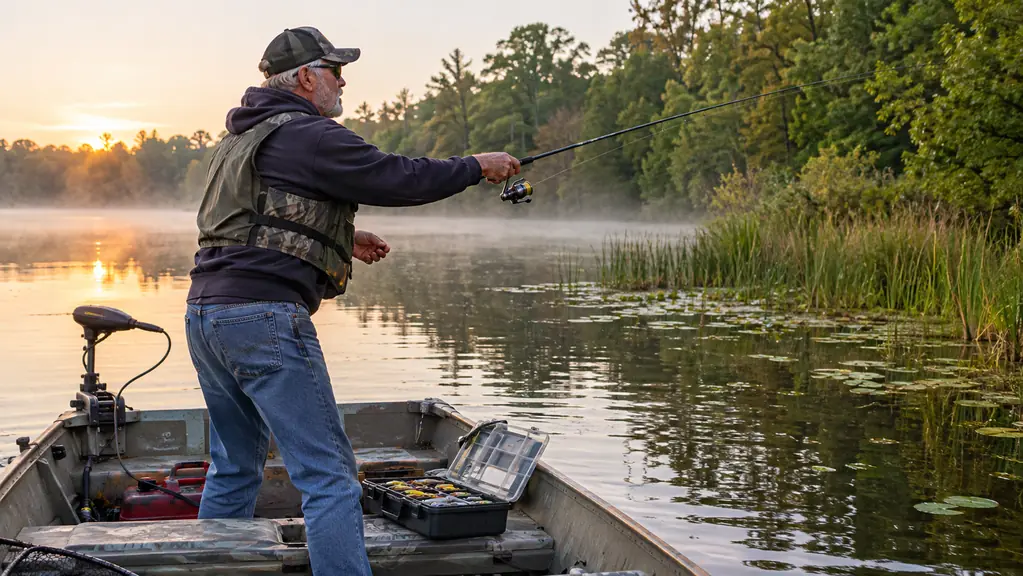
I spooled Berkley Trilene XL in 6-pound test onto a spinning reel three seasons ago and I have not found a good reason to take it off. That gets me a look at the bait shop counter. Monofilament is supposed to be the old stuff, the line a man used before braid took over and everybody started talking about sensitivity. On the water I actually fish, small inland lakes around Kalamazoo County, a nearby river for smallmouth, and the piers at South Haven in the spring, it keeps earning the spot.
Here is what gets left out of the argument. Most of us are not flipping heavy cover for giants. We are casting small baits to bass and bluegill, or drifting a crappie jig off the side of a 14-foot jon boat with a trolling motor on the back. For that work, the numbers printed on a spool of Berkley 6-pound mono tell you nearly everything: 330 yards of line, 0.009 inch in diameter, 6-pound break strength. Plain numbers, and they hold up.
The 6-pound spool that fills a panfish reel and then some
330 yards of Berkley Trilene XL, 0.009 inch diameter, 6-pound break strength. The line I keep coming back to for bluegill, pond bass and river smallmouth.
Amazon See the 6-pound spool on Amazon →It casts clean before you are any good at casting
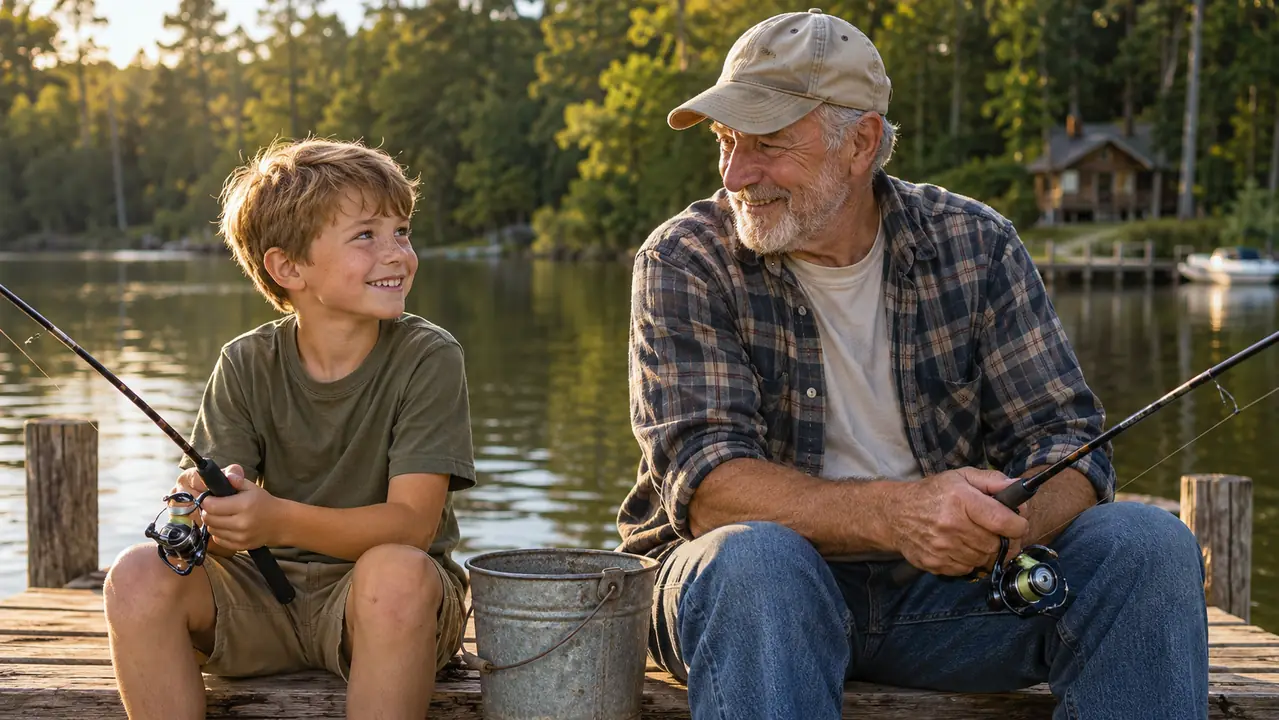
The listing calls this an easy-casting line, and that is what I notice most on the water. My grandson Tyler is 12 and fishes with me on summer weekends. He can lob a small bait out past the weed edge without a bird's nest every third cast. Braid on a stiff rod punishes a beginner. This does not. Half of catching panfish is getting the bait where you meant to put it, and a line that cooperates beats one that measures better on paper.
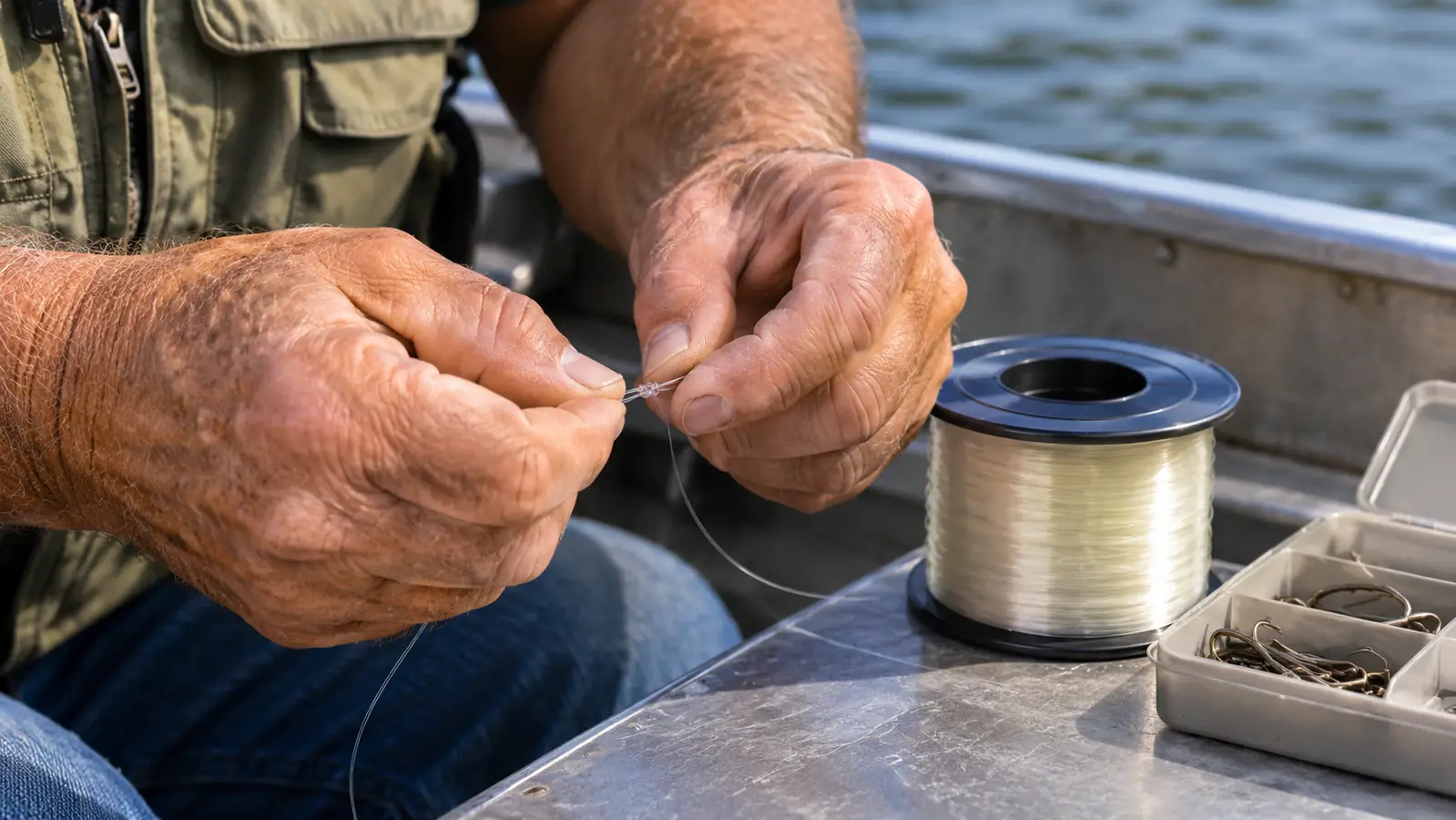
The numbers on the label are honest numbers
Six-pound break strength, which is about 2.7 kilograms. Diameter of 0.009 inch, or 0.22 millimeters. Nothing inflated there, and nothing you have to decode. A 6-pound line lands a two-pound bass if you play the fish instead of winching it across the surface. Bluegill and crappie never test it. Where people get into trouble is expecting 6-pound line to behave like 20, then blaming the line when a fish buries itself in the lily pads.
One 330-yard spool covers more than one reel
330 yards is 301 meters, which is more line than any reel I own will take. So I fill a reel, keep the leftover on the spool in the bottom of my tackle bag, and use it midseason when the top layer gets scuffed. That leftover is the difference between finishing a Saturday and driving home early. I have never run a spool of Berkley down to the arbor in one season on panfish gear.
The thin diameter keeps a small bait acting small
At 0.22 millimeters, this line does not drag a light jig around in the water column the way heavier line does. A sixteenth-ounce jig on 6-pound mono falls at a rate that looks natural to a crappie sitting under a dock. Move up to 10 or 12 and the bait starts hanging back and swinging wide. The fish do not tell you why they stopped eating. They just stop.
Wet strength is the number that actually matters
The specs list optimal wet strength and note that the line keeps its durability when it is submerged. Think about that for a second. Your line is wet from the first cast to the last one. Dry breaking strength is a nice thing to print on a box. Wet strength is what you are fishing with, and it is the reason a line that feels fine in the driveway can fail out on the lake.
One strand means nothing to unravel
Single strand construction. There is no weave to fray, no core to separate from a jacket, and no braided tip that goes fuzzy after a month on the rod. When monofilament starts to go, it tells you. You feel a rough patch above the hook, you run it between two fingers, and you cut back a few feet and retie. That is a two-minute fix at the boat ramp, not a respool.
You can match the break strength to the job
The line runs from 2 pounds up to 30. I keep 6 on the crappie and bluegill rods because that is the water I fish most. If I were dragging a tube through current for river smallmouth, I would move up the range and not think twice about it. One product line covering that spread means I am not learning a new line's habits every time I change what I am chasing that week.
Light line makes a moderate fish feel like an event
The specs put it plainly: a 0.009-inch diameter keeps the fight exciting and still ends it well. That matches my experience. A two-pound bass on 6-pound line is a genuine fight, with the drag ticking and a couple of short runs, and you still land it if you keep your head. On heavy braid the same fish comes in like a wet sock. Some days the point is the fish. Some days the point is the fight.
It works with the rod and reel you already own
I have never had to buy anything special to fish this line. Standard spinning reel, standard rod, the Palomar knot I learned from my dad. No leader material on most days, no special tool, no learning curve. That sounds like a small thing until you are standing on a pier at South Haven in October with cold hands and a tangle, and the simpler setup is the one that gets you back to fishing.
It is the line I hand a kid without worrying
Tyler has put this line through every abuse a 12-year-old can invent, including a cast into a willow tree and one memorable snag on a dock cable. Each time we cut back a few feet, retied, and kept going. He learns to tie a knot properly because he has to, and I do not lose a whole spool teaching him. Berkley has been making this line a long time, and it shows in how little fuss it makes.
What I'd Skip
Monofilament is not the answer for everything, and I would not pretend otherwise. If you are pitching frogs into matted weeds, you want braid, full stop. Around rock ledges and zebra mussels on the river, this line scuffs and you will be cutting back more than you like, so a heavier mono or a leader makes more sense there. It also does not last forever. Sun and heat break it down, so I respool the reels I use hardest at the start of every season whether the line looks bad or not. And it has more give than braid, which helps on a thrashing fish at the net and gets in the way when you need to drive a hook home at 40 feet. Know which one you are doing before you tie on.
A 6-pound line at 0.009 inch is thin enough that a crappie jig falls the way it was built to, and it still ends the fight with the fish in the net.
One spool, one season, and a kid who can cast it
Berkley Trilene XL in 6-pound test, 330 yards, 0.009 inch diameter. The plain answer for panfish, pond bass and a river smallmouth on a light rod.
Amazon See the 6-pound spool on Amazon →