
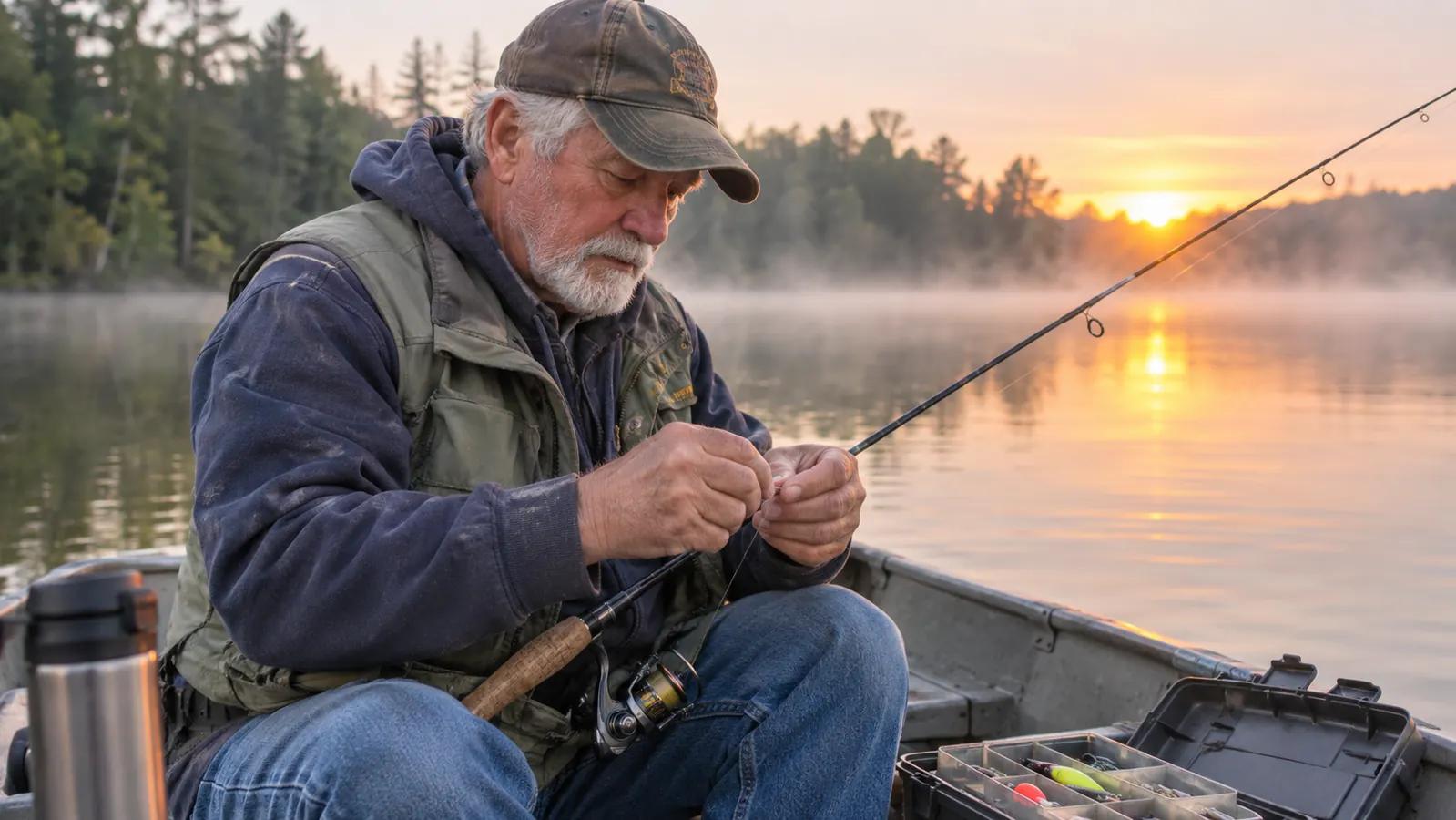
Short answer: if you want one spool of six-pound mono that behaves the same on every reel you own, buy the Berkley Trilene XL. It is the line I have respooled with more than any other, and after years of it I can tell you what it will and will not do before it ever touches water. The KastKing Premium Monofilament is not a bad line. It is a good line that costs less and asks you to pay attention to one thing Berkley handles for you.
I am Russ Calloway. I am 61, retired from the machinist trade, and I live outside Kalamazoo where I fish small inland lakes for bass, bluegill and crappie, a nearby river for smallmouth, and the South Haven piers when the salmon and steelhead run. Most of my fishing happens out of a 14-foot aluminum jon boat with a trolling motor clamped to the transom. My grandson Tyler comes along on summer weekends and out-fishes me about half the time. I buy line with my own money and I have thrown away spools of both of these brands.
| Berkley Trilene XL | KastKing Premium Mono | |
|---|---|---|
| Test and length | 6-lb test, 330 yards on the filler spool | Sold in several test weights and spool sizes, including bulk spools |
| Stated diameter | 0.009 inch, 0.22 millimeters | Diameter varies by test weight, check the spool label |
| Manageability on a spinning reel | Very limp, low memory, casts cleanly on the first trip | Limp enough, but it wants a few casts to settle |
| Knot strength | Holds an improved clinch and a Palomar reliably at 6-lb | Holds well when you wet the knot, less forgiving if you do not |
| Abrasion resistance | Decent for mono, not a leader material | Slightly tougher feel against rock and wood |
| Stretch | Noticeable stretch, which is why it forgives a hard hookset | Similar stretch, feels marginally stiffer |
| Price | Check today's price | Usually a little less per yard |
| Availability | On the shelf at every bait shop and big box I walk into | Mostly online, occasional tackle shop |
| Best for | Spinning reels, panfish, crappie, finesse bass, teaching a kid to cast | Baitcasters, backing, bulk respooling on a budget |
Where Berkley Trilene XL Wins
Manageability is the whole ballgame with six-pound mono, and this is where Trilene XL earns its spot on my bench. The line comes off the spool limp and stays limp. On a small spinning reel with a shallow spool, that means fewer loops, fewer wind knots, and fewer casts where the line comes off in a coil and takes your bait into the weeds. Last June I filled a 2500-size reel with it on a Thursday evening, stopping about an eighth of an inch below the lip of the spool, and was on the water at 6:40 the next morning. First cast was a quarter-ounce Beetle Spin into a light chop. No coil, no thumb on the spool, no wasted cast. Line that needs a break-in period is line that costs you fish on the one morning you had free.
The 0.009 inch, 0.22 millimeter diameter at 6-pound test is the number I actually care about, because it is thin enough to cast a small jig a respectable distance and still hold up when a smallmouth grabs it near the boat. Trilene XL also holds a knot without drama. I fish an improved clinch most of the time and a Palomar when I am tying in low light, and at 6-pound test both come tight and stay tight. I have tested that the hard way. A 14-inch crappie took a jig under a dock float in about four feet of water, and the Palomar I had tied twenty minutes earlier with cold hands held through the entire fight and the lift over the gunwale. A knot that fails once teaches you to change brands. That one did not.
Consistency across reels is the part nobody talks about. I have spooled this line onto four different reels over the years, two of them cheap, one of them a hand-me-down that had been sitting in a garage for a decade, and I got the same behavior out of every one. Same limp feel going on, same clean cast, same knot performance. When you find a line that acts the same on a bargain reel and a decent one, you stop thinking about line altogether. That is the goal. Good line disappears into the background of a fishing trip.
There is also the boring advantage: I can walk into a bait shop in Three Rivers or a big box store on Westnedge and buy another spool of it the same afternoon. Two seasons back I cut off a scuffed stretch below the rod tip on a Saturday morning, drove eleven minutes to the shop, and was back on the water before the coffee in my truck went cold. When you fish the way I do, in short trips squeezed between other obligations, a line you can replace without waiting on a delivery is worth something real. It is not a romantic reason to choose a product. It is the reason that keeps mattering.
The line I keep respooling with, in the exact 6-lb, 330-yard spool
Six-pound test, 0.009 inch diameter, 330 yards. If you fish small inland lakes and river bends the way I do, this is the spool to start with.
Amazon Check Today's Price on Amazon →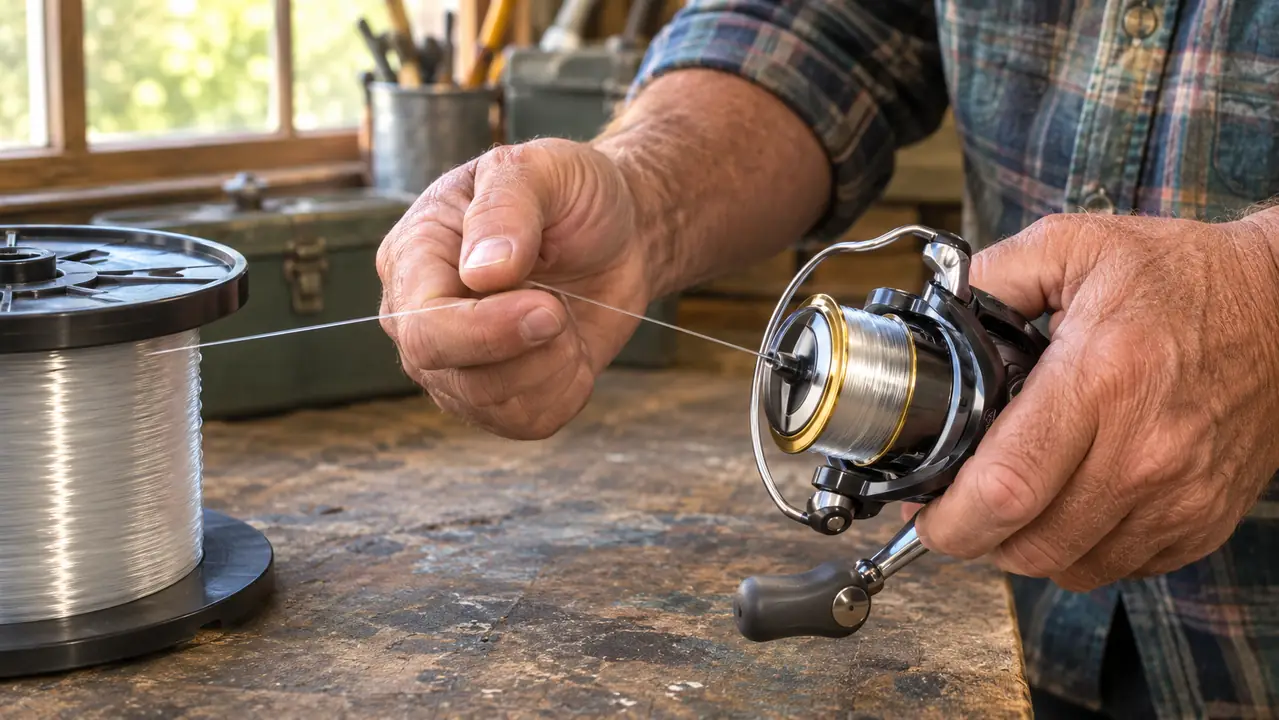
Where KastKing Premium Monofilament Wins
I will give KastKing this: it is tougher against structure than I expected for the money. I ran it along a stretch of river with chunk rock and a couple of sunken trees, the kind of water where mono gets scuffed and you find out about it on the next hookset. It held up. I dragged a Texas-rigged worm through one stretch maybe twenty times over two hours, bouncing bottom the whole way, and when I finally ran the last six feet between my thumb and forefinger I found the scuffing but no fraying and no flat spots. The same treatment on Trilene XL leaves the line usable but noticeably rough. It felt slightly stiffer in the hand than the Berkley line, and in that rocky water I was not unhappy about it. If your fishing is mostly dragging a bait along a bank with wood and rock, that extra bit of scuff tolerance is a genuine plus.
It is also cheaper per yard, especially in the larger spools, and that matters in one specific situation. Spooling a kid's reel. Tyler has lost more line to birds nests, backlashes and one memorable incident involving a bike spoke than I care to count. When you are refilling a reel every couple of weeks because a 12-year-old is learning, cheap mono that behaves reasonably well is the right answer. KastKing fills that role fine, and I do not wince when I cut off twenty feet of it.
Here is the trip that made the case for me. Last August Tyler and I took the jon boat up a river bend where the bank is nothing but rock and the current keeps you pinned against it. He was throwing a small crankbait and hanging it up in the shallows every third cast, which is what 12-year-olds do. By the time we quit I had cut and retied his bait eleven times and respooled about forty feet of line back onto his reel from the bulk spool in the truck. If that line had been the expensive spool I would have been doing math in my head every time I reached for the clippers. Instead I handed him the rod and told him to cast again. That is what a cheap, decent mono is for.
Trilene XL is the line I trust on my own reel. KastKing is the line I trust when I am filling three reels on a Saturday morning and one of them belongs to a kid.
Where They Are Basically the Same
Both are monofilament, and mono does what mono does. Both stretch. Both absorb a little water over a long day and both cast a little differently on the second trip than the first. Both need to be respooled eventually, and neither one is going to survive a summer in a hot garage without getting brittle. I have also had both brands fail on me at the hookset. A bad batch or a spool that sat in the sun will do that to any mono, and anyone who tells you otherwise is selling something.
The honest difference between these two lines is smaller than the marketing on either package suggests. You are not buying a different category of product. You are buying a different set of tradeoffs at a similar price. Neither one is going to turn a bad cast into a good one, and neither one will save a drag that is set too tight. If you were hoping this comparison would end with one line being rubbish, it will not.
How I Actually Tested These
No lab, no line-testing machine, no sponsored trip. I spooled both on identical 2500-size spinning reels, both with fresh drag washers, and fished them on the same water within a few days of each other. Six-pound test on both, since that is my standard for panfish and finesse bass. I fished small jigs, a Beetle Spin, and a Texas-rigged worm on a river bend for smallmouth. Water temperature on the first outing was in the low seventies. On the second it had dropped into the mid sixties after two days of rain, which is a fair test of how a line behaves cold.
What I watched for: how the line came off the spool on the first fifty casts, how many wind knots I tied, how the knots held, how the line looked after a day against rock, and whether anything about it made me think about the line instead of the fishing. That last one is the real test. Good line disappears. Bad line becomes the story of the trip.
On the Trilene XL spool I tied two wind knots in a full day. On the KastKing spool I tied five, all in the first hour while the line was settling. After that it behaved. That is not a knock on the line so much as an honest note about what the first trip feels like. If you spool up the night before and fish at dawn, those five knots land on the one morning you had.
I also measured what I could measure with what I have. I filled each spool to the same point, an eighth of an inch below the lip, and counted casts before the first overrun on both. Trilene XL got through the first hour clean. KastKing needed about thirty casts to settle. I checked the last six feet of line on both after every fish, and I clipped and retied at the slightest sign of roughness on either. That habit matters more than the brand on the spool, and it is the one piece of advice I would give anybody reading this.
What I'd Skip
I would skip the giant bulk spool of either brand if you only fish a couple of reels. Mono goes bad. It gets brittle from heat, it takes a set from sitting on the spool, and a spool you cannot finish in two seasons is money in the trash. A 330-yard filler spool in 6-pound test fills a small spinning reel several times over, which is about right for one angler for one season. Buy the size you will actually fish through in a year. For a deeper look at how this line holds up over multiple seasons, the long-term notes are worth reading before you commit to a bulk purchase.
I would also skip the idea that either of these is a leader material or a heavy-cover line. If you are fishing around serious wood or rocks with big fish, go to fluorocarbon or braid and stop asking mono to do a job it is not built for. Mono is a casting line and a forgiving line. That is its whole personality. The stretch that saves you on a light wire hook is the same stretch that will not turn a big fish out of a brush pile. Pick the line for the water you are actually fishing, not the water in the video.
Who Should Buy Which
Buy the Berkley Trilene XL if you fish spinning reels, if you throw small jigs and live bait for panfish and crappie, if you fish from shore or a small boat and you want the line to just work on the first cast of the morning. Buy it if you are teaching somebody to fish and you want to remove one variable from the equation. Buy it if you want to walk into a store and buy the same thing again next season. That is my situation and it is why the Trilene XL stays on my reels.
Buy the KastKing Premium Monofilament if you respool often, if you are filling several reels at once, if your water is scruffy with rock and wood and you want a little more forgiveness against abrasion, or if you are outfitting a kid's reel and you do not want to think about the cost every time you cut off a tangled mess. It is a working line at a working price and there is nothing wrong with it. If your season is a handful of trips and your reels live in a garage, the cheaper spool makes more sense than mine does.
If you are somewhere in the middle, do what I do. Keep a filler spool of the Berkley line for your own rod and a bulk spool of the cheaper stuff for the guests, the backups and the kid. That is not a compromise. That is just how a boat with more than one rod on it actually gets run.
Either way, wet your knots, check the last six feet of line after every fish, and respool before the season starts instead of after it starts going wrong. Do that and either spool will treat you fine. Skip it and neither one will.
Start the season with fresh 6-lb mono on the reel
330 yards of Trilene XL in 6-pound test is enough to fill a small spinning reel several times over. Check the current price and get it done before your first trip.
Amazon Check Today's Price on Amazon →