
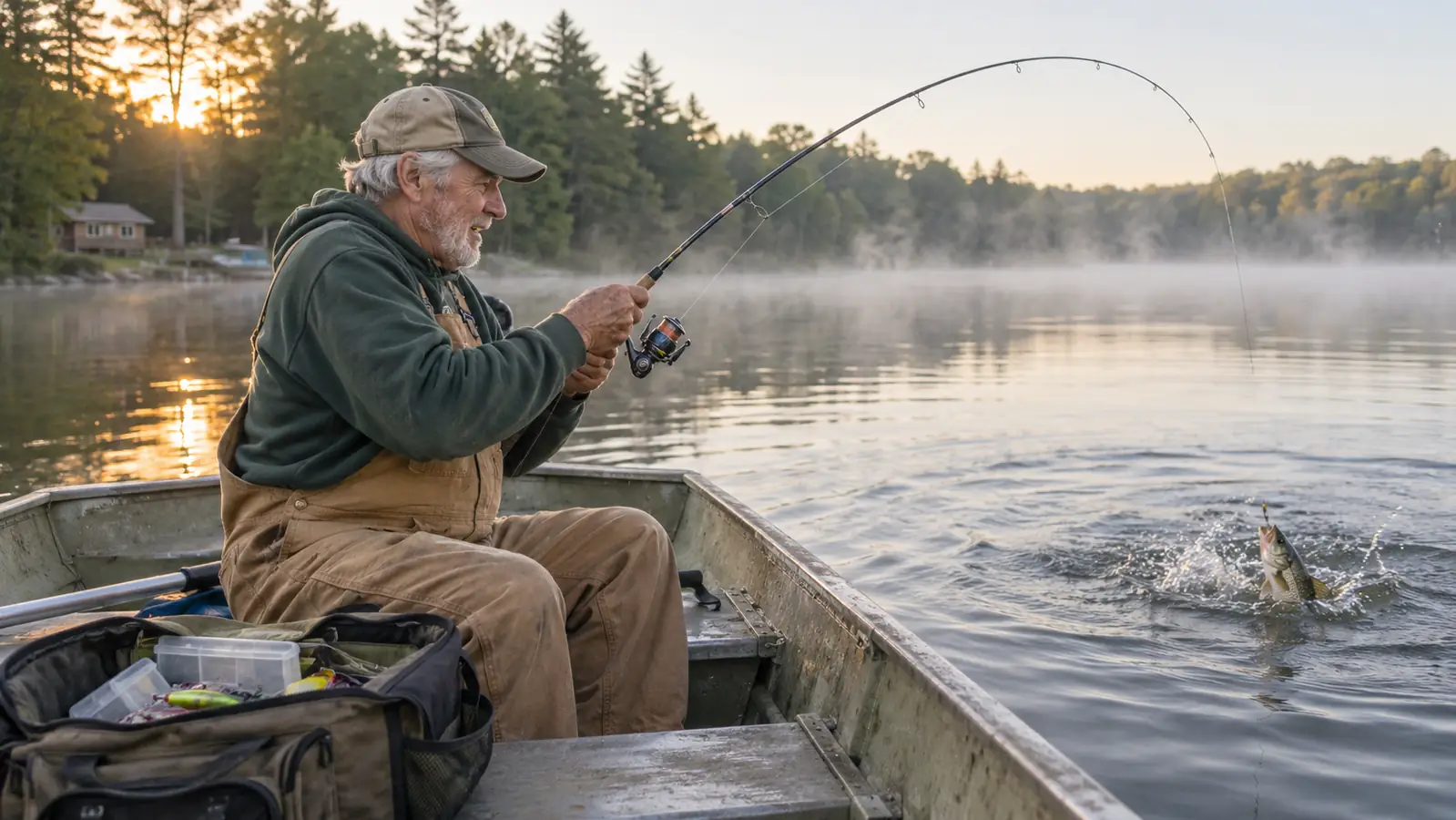
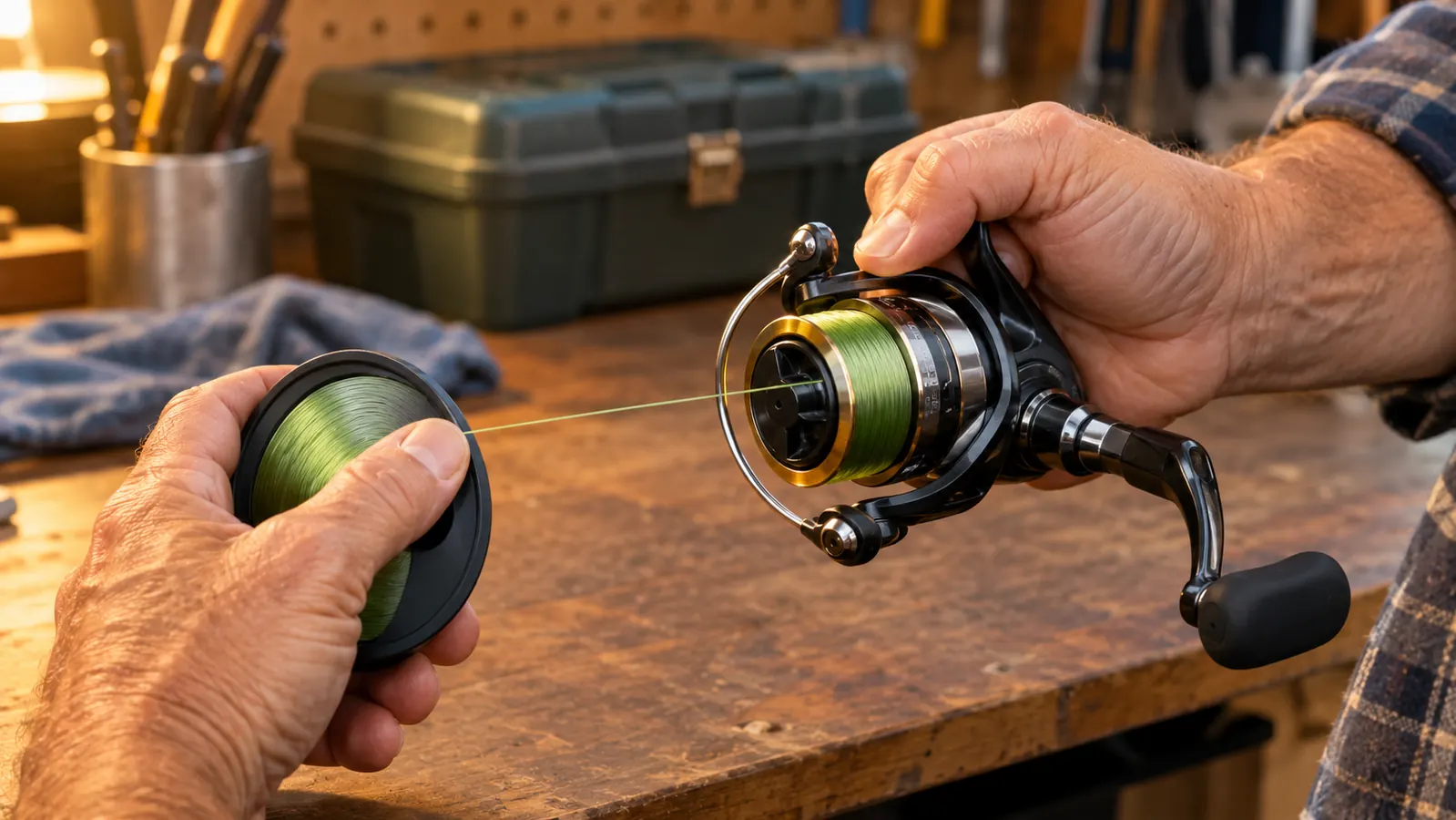
I spooled Berkley Trilene XL onto a spinning reel in April, in the garage, with the door open and a cold drizzle coming down. It took me three tries to get it on there without a bird's nest, which says more about me than about the line. I am 61, a retired machinist, and I live outside Kalamazoo where the water is small, the pressure is light, and most of my fishing happens from a 14-foot aluminum jon boat with a trolling motor bolted to the back. The 6-pound test spool runs 330 yards. My goal was simple. One line I could trust for bluegill and crappie on the inland lakes, and for smallmouth on the river when the current is doing more work than my cast.
Monofilament gets treated like the participation ribbon of fishing line these days. Braid and fluorocarbon get the magazine covers, and mono sits in the bottom of the tackle box until somebody's kid needs a rod set up. On the water I actually fish, a line that casts easily and has some stretch in it does more for me than a line I can feel a bass breathe on. Berkley has been making Trilene XL for a long time, long enough that I remember my dad spooling something in the same family. That history cuts both ways. It means the line is proven. It also means a fair number of the reviews you read were written by people who have not fished anything else since the Clinton administration.
The Quick Verdict
A forgiving 6-pound mono that casts light lures cleanly and seats knots all season. Not a cover line, and it will remind you about memory if you leave it in a hot truck bed.
Amazon Check Today's Price →The Line I Re-Spool With Every April
Berkley Trilene XL in 6-pound test, 330 yards on the filler spool. Easy casting for small jigs and light cranks, with the give that keeps treble hooks pinned on a short strike.
Amazon Check Today's Price on Amazon →How I've Used It
I ran this line from the second week of April through the end of October, roughly forty trips, on two spinning reels, a 1000-size and a 2500-size. I filled both spools with backing first and topped them off with Trilene XL, which is the only way to get a full spool out of a 330 yard filler without wasting line you will never use. April and May were crappie trips, 1/16 ounce jigs under a slip bobber, plus the occasional small crankbait. June through August was bluegill and largemouth in the shallows with worms and small spinnerbaits. Tyler, my grandson, comes along on some summer weekends, and I set him up with a bobber rig on the same line because I did not want to hand a 12-year-old something finicky.
September and October belonged to the river, wading sections for smallmouth, and to the piers at South Haven when the weather let me. That is a different job entirely. On a pier you are casting into wind. On the river you are dragging a lure across rock. I used two knots all season, a Palomar for jigs and hooks and an improved clinch when I was in a hurry or the light was going. I re-tied more often than I needed to, because old habits die hard when you learn to fish with a father who grew up in the Depression and considered a lost lure a family budget problem.
Across the whole season I broke off four times. Three of those came on hooksets where I was swinging more rod than the situation called for. One was a genuine failure, a crankbait I had dragged across a dock post and then stubbornly kept fishing. That is not a line problem. That is me. What impressed me more than the break strength was the casting. A 6-pound mono with a 0.22 millimeter diameter lets a small lure go where you point it, and Trilene XL has enough forgiveness in it that my marginal casts still came out straight instead of fluttering.
What 6-Pound Test Really Means on Small Water
Six-pound test means different things depending on who is holding the rod. The spool I fished is rated at 6 pounds breaking strength and 0.22 millimeters in diameter, which works out to 0.009 inch. That is a light line by bass standards and a heavy line by trout standards. On the inland lakes it let me cast a 1/16 ounce jig without a split shot and still feel the difference between a tick on a rock and a tick on a shell bed. What it does not give you is lifting power. When a largemouth buries itself in lily pads, you are not winching it out on 6-pound mono. You are hoping the pad gives first.
The biggest fish I landed on it was a smallmouth just under 18 inches, in current, on a tube. She made three runs and the line did exactly what monofilament is supposed to do. It gave a little, kept tension, and never shocked the hook loose. My drag was set light enough that a hard head shake could take line, and that is the whole trick with light mono. Lock the drag down and try to stop a good fish and you will find the break strength the hard way. I have done that. It is not Berkley's fault, and I still felt like an idiot.
The short version: 6-pound Trilene XL is right for crappie, bluegill, finesse bass on open water, and river smallmouth. It is wrong for docks, laydowns, chunk rock, and anything with teeth. The same line is sold in break strengths from 2 pounds up to 30, and if I fished heavy cover more often I would spool the 10 or 12 and keep the 6 on the panfish rod. Buying one spool and expecting it to cover every situation is how people end up writing one-star reviews about a product that was never built for the job they handed it.
Casting, Spooling, and the Memory Question
Casting is where this line earns its keep. On a spinning reel with a 2500-size spool, a small floating crankbait went about as far as I can throw one with these shoulders, and it came off clean with no fluff. That matters more than it sounds on a windy morning at South Haven, where you get one shot at a lane between the pilings before the wind pushes your lure back at your boots. The listing describes it as a single strand monofilament in a blend material, and it comes off the filler spool soft. That softness is the reason it casts well.
Now the part nobody likes. Monofilament has memory, and Trilene XL has memory. I left a spare spool in the truck bed for two weeks in July, and when I finally put it on, the line came off in coils that wanted to jump off the reel and wrap the arbor. That is on me, not on Berkley. Line that sits in the sun and heat on a dark bed liner gets cooked, and any mono on the market will do the same thing. What worked: soak the filler spool in a bucket of lake water for twenty minutes before spooling, put it on with steady tension, and keep the rods out of the cab when you can.
Even with good habits you will see some coil early in a session, usually the first ten or fifteen casts. After that it lays down and stays put. I did not use line conditioner this season, mostly out of laziness, and a guy who does would probably have fewer complaints than I did. The one claim in the listing I can confirm from the water is wet strength. The line held up submerged, hour after hour, through rain and through a cold morning where the guides iced up, and I never had a failure I could blame on the line taking on water.
Knots, Abrasion, and the Held-Up Report
Knots held. Palomar, improved clinch, and one loop knot experiment I abandoned because the loop kept fouling the hook point. With 0.22 millimeter line you have to be deliberate about wetting the knot and seating it slowly, especially the clinch. Yank it tight dry and you will scorch the line and lose a fish, and then you will blame the manufacturer for your own hurry. I tied a fresh Palomar every time I changed a lure, which on a crappie trip is a lot of knots, and I cannot remember a single one that slipped.
Abrasion is the honest weak point. The river I fish has a gravel and rock bottom with a couple of ledges, and dragging a tube through it scuffs the line above the knot. You can feel it with a thumbnail, that roughened stretch that catches. I cut back and re-tied whenever I felt it, which cost me a few feet of line a trip. If you fish rock or shell beds regularly, plan on losing the last two or three feet above your lure every trip. That is not unique to Berkley. That is what monofilament does, and pretending otherwise is how tackle boxes end up full of line nobody trusts.
Where It Gave Me Trouble
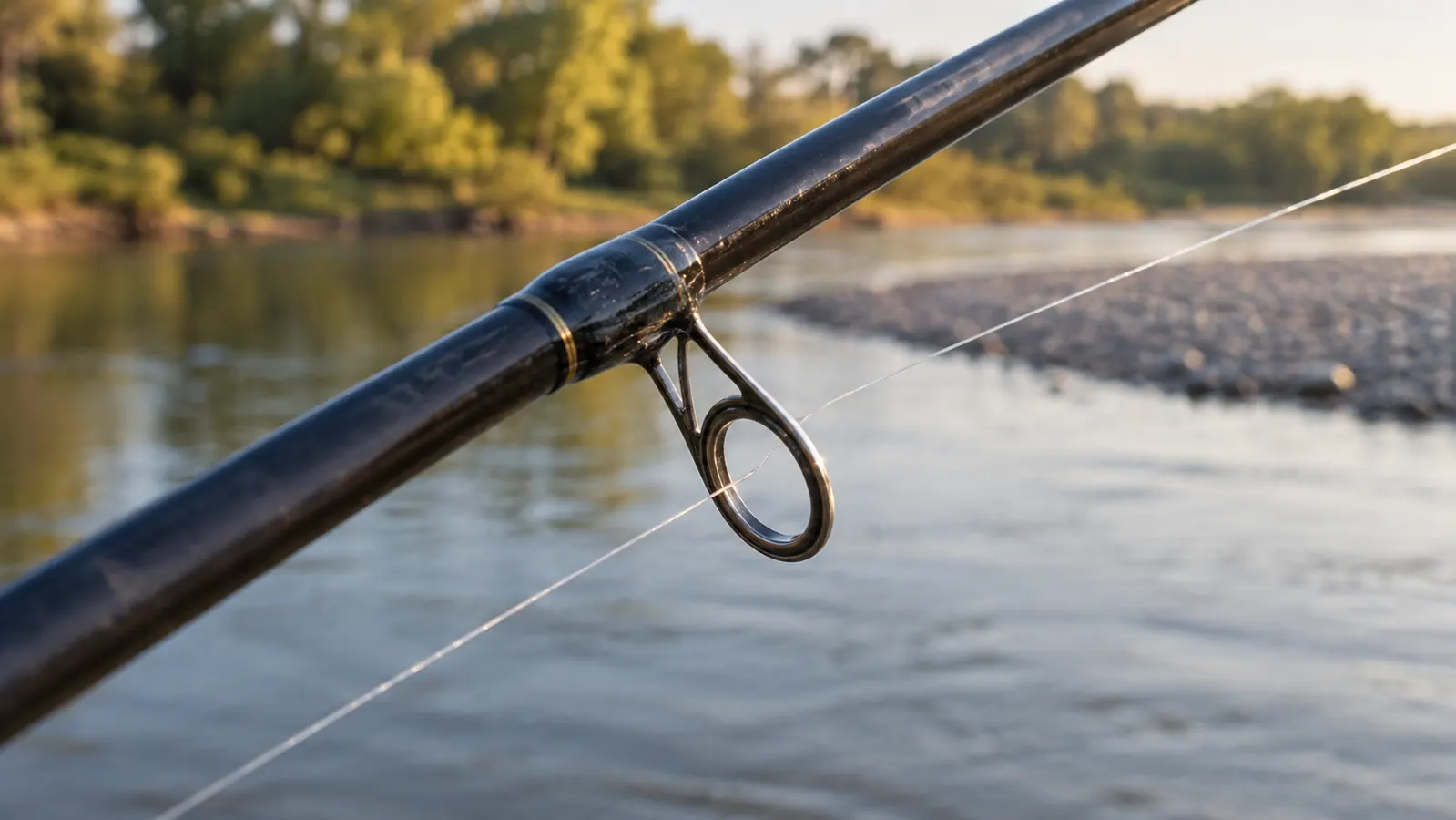
Two complaints, and I will be straight about both. First, the stretch cuts both ways. That give is why I did not lose fish on the hookset, and it is also why a long cast with a jig feels slightly disconnected, like steering a car with a rag in the linkage. Braid will out-feel it every time on a deep, slow presentation. Second, the line is at its worst after neglect. Leave it on a reel in a hot garage and the first trip back is a coil-fighting session. Re-spooling the top forty yards fixes it, and it is the reason I now buy the 330 yard filler and expect to work through most of it in a season.
One more thing worth knowing before you spool up. The full filler spool weighs 2.08 ounces, so it packs small in a tackle bag and you can carry a spare without noticing it is there. I kept one in the boat all season and never once thought about it. If you are the kind of angler who re-spools the night before a trip, a single filler will get you through a full season on two spinning reels with top-offs in between. That is the practical case for the big spool over the small one. You are not saving money buying tiny spools, you are just making more trips to the store.
What I Liked
- Casts light lures cleanly on spinning gear, even into wind
- Enough stretch to keep treble hooks pinned on short strikes
- Palomar and improved clinch seated reliably all season
- 6-pound, 0.22 millimeter diameter covers crappie, bluegill and finesse bass
- Held up across forty trips with one breakoff I could blame on the line
- 330 yard filler covers two reels with top-offs and a spare in the boat
Where It Falls Short
- Memory shows up fast if the spool sits in heat
- Scuffs on rock and shell, so you lose a few feet per trip
- Stretch dulls feel on deep, slow presentations
- 6-pound test will not pull a bass out of pads or laydowns
Forty trips, four breakoffs, and three of those were me swinging on the hookset like I was driving a spike. The line did its job.
Who This Is For
This is a panfish and finesse line, and it is very good at that job. If your season looks like mine, crappie and bluegill on small inland lakes, finesse bass in open water, river smallmouth on light tackle, and a kid's bobber rod in the mix, the 6-pound Trilene XL will do everything you ask without drama. It is also a sensible choice for anyone fishing spinning tackle who wants a line that behaves on the cast and forgives a hookset. If you re-spool a couple of times a season and you keep your tackle out of the sun, you will get a clean, predictable line for the whole year.
Who Should Skip It
Skip it if you fish heavy cover, docks, laydowns or chunk rock, where you need to lean on a fish and drag it out. Skip it if you need bottom contact feel on deep structure, because braid wins that argument and it is not close. Skip it if you chase pike or muskie, since teeth and 6-pound mono are not a combination anybody should test. And skip the big spool if you fish twice a summer, because line goes bad on the shelf as well as on the reel. Step up to the heavier break strengths in the same family or go to braid with a leader. Buying the wrong tool and then blaming the tool is the most expensive habit in fishing.
Spool It Once, Then Stop Thinking About It
Berkley Trilene XL, 6-pound test, 330 yards. The line that handled a full Michigan season on two spinning reels, from April crappie to October smallmouth.
Amazon Check Today's Price on Amazon →