
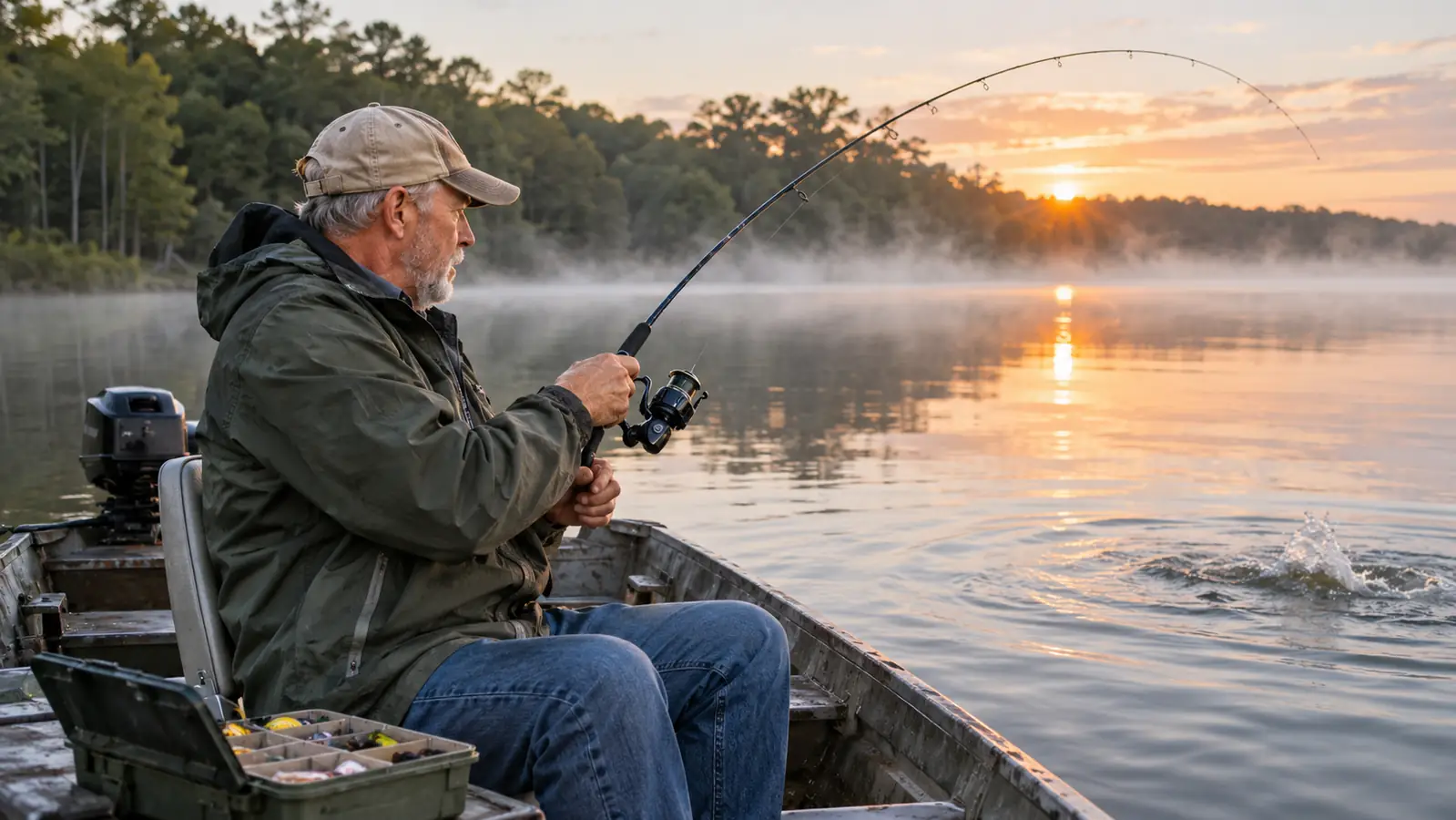
I have spooled more Berkley Trilene XL than any other line in my cabinet, and I still do not think it is the right line for every job. That is the short version of this honest review. I am 61, a retired machinist, and I fish the small inland lakes of southwest Michigan around Kalamazoo for bass, bluegill and crappie. I also fish a nearby river for smallmouth and the South Haven piers when the run is on. Most trips happen from a 14-foot aluminum jon boat with a small trolling motor, or from shore when the wind has other plans. The spool I keep coming back to is the 6-pound test, 330-yard size. Berkley lists it at 0.22 millimeters and 2.08 ounces. It is a general-purpose monofilament, not a specialty line, and that is exactly why it has stayed on my shelf.
Here is what I want to do in this review. I am not going to pretend a 6-pound mono is a heavy-cover line, and I am not going to call it junk because it stretches. Both things are true at once. Trilene XL is soft, casts easily and forgives a lot of mistakes. It also has memory, it does not like abrasion, and it will tell you when you ask too much of it. The question is whether those trade-offs fit the fishing you actually do. For me, on panfish and small moving baits, they mostly do. On rock and wood, they mostly do not.
The Quick Verdict
A forgiving, easy-casting 6-pound mono that is at its best on panfish, trout and small moving baits. It is not the line for rock, wood or anglers who hate stretch.
Amazon Check Today's Price →A fair line for finesse and panfish, not a do-everything line
The 6-pound, 330-yard spool is the one I have used most. If that matches your fishing, it is worth a look.
Amazon See the Berkley Trilene XL on Amazon →How I've Used It
I started this spool in early May and fished it through the end of October. It went on a 1000-size spinning reel for bluegill and crappie and a 2500-size reel for bass and river smallmouth. I did not baby it. I fished bobber rigs, small crankbaits, a 1/16-ounce jig, and a few light Texas rigs around the edges of weed beds. I retied often, especially after a fish rubbed the line on a dock post. I respooled once in July, not because the line failed, but because I had pulled off enough line to create a noticeable coil and I wanted a clean start. That is normal for mono. The spool still had plenty left for the second fill and a few leader sections.
My grandson Tyler, who is 12, used it on his closed-face reel for bluegill. He is not gentle with tackle. He sets the hook like he is trying to ring a bell, and he lays the rod down on the boat seat when he reaches for a snack. The line survived that. It also survived a few snags where I had to point the rod at the lure and pull straight back. I would not make a habit of that, but the 6-pound test held when I was careful. When I was not careful, it broke. That is not a defect. That is a 6-pound line acting like a 6-pound line.
I kept a small notebook in the console, mostly because I forget things. I wrote down wind knots, break-offs and the conditions. I had three wind knots all season, all on casts into a stiff crosswind with a light jig. I had two break-offs, both on river smallmouth near rock. I landed plenty of bluegill, a few crappie, a handful of largemouth up to about two pounds and one smallmouth that I guessed at 14 inches. The line did not fail on any of those fish. It did fail when I dragged a lure across a rock ledge and then leaned on the rod. That is a fair summary of what this line is.
I also used it on the South Haven piers in the fall, mostly for perch and whatever else wandered by. Pier fishing is hard on line. The concrete edge, the metal rail, the wind, the grit on your hands. I checked the last six feet after every few casts and cut back when it felt rough. That is not a knock on Berkley. It is what you do with any mono on a pier. If you skip that step, you will lose fish and blame the line.
What the Specs Mean on the Water
The label numbers are simple. Berkley Trilene XL in this size is 6-pound test, 330 yards, 0.22 millimeters in diameter, and 0.009 inch. The spool weighs 2.08 ounces. The listing says the line is a monofilament blend, single strand, with wet strength that holds up when submerged. It also says the line is available from 2 to 30 pounds. I cannot speak to every size, only the 6-pound. What I can tell you is that the diameter is the number that matters most for the fishing I do. A thin 6-pound mono casts a small jig better than a thicker line, and it lets a bobber rig sink at a natural pace.
The 330-yard spool is a practical size for a weekend angler. It is enough to fill a small spinning reel more than once, or to fill one reel and have plenty left for leaders and respools. I know some anglers buy bulk spools to save money. I do not. A 330-yard spool stays fresh longer, and I would rather start a season with line that has not sat in a hot garage for three years. Berkley packages this one on a standard spool, and it went onto my reel without a lot of coiling. That is a small thing, but small things matter when you are trying to get out of the driveway before sunrise.
The stretch is the spec that does not show up in the table, but it is the one you feel. Monofilament stretches. That is not a flaw, it is the design. On a close-range bluegill bite, the stretch helps keep a small hook from tearing out. On a river smallmouth that runs at the boat, the stretch can make the fight feel softer than it is. On a long cast to a wary bass, the stretch can cost you hook-setting power. You have to decide which of those matters more. For a 6-pound line on a light rod, I take the forgiveness. If I were fishing a heavy jig in rock, I would spool something else.
Where It Earns Its Keep
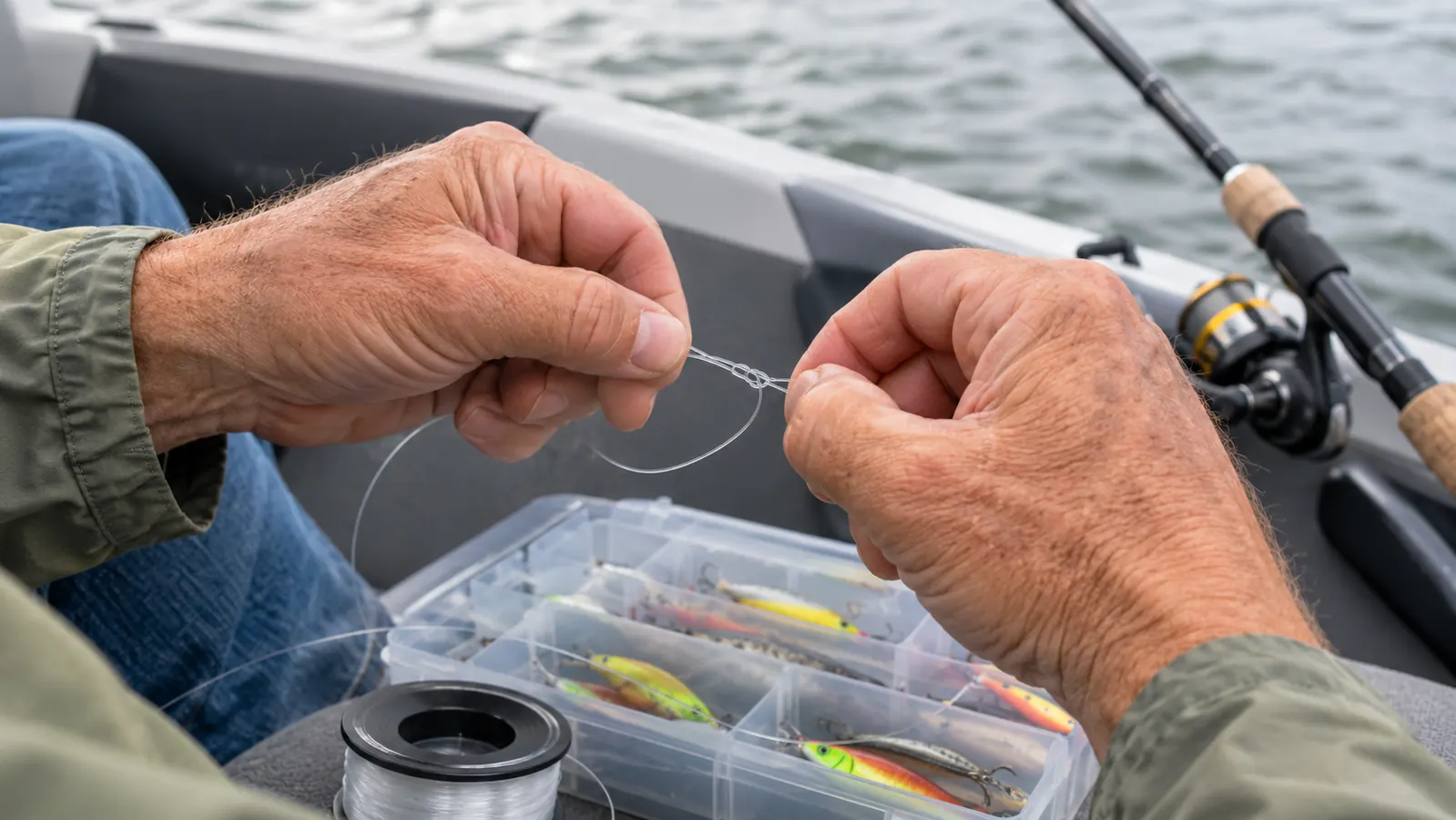
The first place this line earns its keep is panfish. Bluegill and crappie do not need a heavy line, and they do not need a line that fights every cast. Trilene XL is soft enough to cast a small bobber and a 1/32-ounce jig without a lot of drama. It ties a clinch knot easily, and it seats down tight. I used an improved clinch most of the time and a Palomar when I had enough light. Both held. I cannot give you a lab number for knot strength, but I can tell you that I did not lose fish to a knot that slipped. I lost fish to hooks pulling free and to my own impatience.
The second place is small crankbaits and light spinnerbaits around weed edges. A 6-pound mono lets a small squarebill run at the depth it was made to run, and it gives you a little cushion when a bass makes a short run. I fished a shallow flat in June with a small crankbait and caught several largemouth. The line handled the casts and the fish. It did not handle the one time I tried to horse a fish out of a lily pad cluster. That was my mistake. The line did not break at the knot. It broke where it had rubbed on a pad stem. That is a lesson I already knew.
The third place is the river, when I am fishing small tubes and grubs for smallmouth. The line casts well and it has enough give to keep a short-striking fish hooked. The river also showed me the limit. Smallmouth around rock will find every nick in your line. I checked the last few feet after every fish and cut back when I felt a rough spot. When I did that, the line held. When I skipped it, the line broke. The 6-pound test is not a river rock line. It is a river finesse line, and only if you pay attention.
I had three wind knots and two break-offs all season, and both break-offs came after the line rubbed rock.
Where It Let Me Down
The first letdown is memory. By July, the line had taken on a coil from the reel, and it started to loop off the spool on slack casts. That is normal for monofilament, especially in the heat. I respooled and the problem went away. If you are the kind of angler who leaves the same line on for two seasons, you will not like this line by the end of the first one. I am not saying Berkley is worse than other monos here. I am saying that this is a maintenance line. You have to change it, or you have to live with the coils.
The second letdown is abrasion. I fish around docks, rocks and a few bridge pilings. Trilene XL does not shrug off a rough edge. It will take a nick and then it will break at that nick. I learned to run the line through my fingers after every fish and after every snag. When I did, I caught fish. When I did not, I donated a lure. That is not a reason to avoid the line. It is a reason to be honest about where you are fishing. If you are in rock all day, a 6-pound mono is the wrong tool.
The third letdown is stretch on a long hookset. I had a few fish take a small jig at the end of a long cast, and I felt like I was setting the hook through a rubber band. I landed some of those fish and missed others. A braided line would have given me a more direct connection. It also would have changed the way the jig fell and the way the fish ate it. I am not going to pretend there is one right answer. I am saying that if you hate stretch, this line will bother you. If you want a soft, forgiving presentation, the stretch is part of what you are buying.
What I Liked
- Casts small jigs and bobber rigs easily.
- Forgiving stretch helps keep small hooks from tearing out.
- Ties well with improved clinch and Palomar knots.
- 330-yard spool leaves room for a respool and leaders.
- Wet strength holds up on long, damp days.
Where It Falls Short
- Memory builds by midsummer, especially in heat.
- Not abrasion resistant around rock or dock posts.
- Stretch softens long-range hooksets.
- 6-pound test is not a heavy-cover line.
- Needs regular inspection and respooling.
The Parts Nobody Mentions
Nobody talks much about line management, but it is half of what makes a mono work. I spooled this line with a pencil through the spool and a little tension from my fingers. I did not overfill the reel. I left about an eighth of an inch of spool lip showing. That one habit prevented more wind knots than any line could. If you fill the spool to the edge and then cast a light jig into the wind, you will get loops. That is not a Berkley problem. It is a spooling problem.
Nobody talks about the wet strength claim either. I can tell you what I noticed. On a rainy Saturday in September, the line felt the same after two hours as it did at the start. It did not go limp or fray. I cannot prove that with a meter. I can tell you that I checked the last few feet and it still felt smooth. That is the kind of thing the listing means by wet strength. It is not a promise that the line will survive a rock. It is a promise that water alone will not ruin it.
One more thing nobody mentions is how the line behaves on a cheap reel. I put it on an older spinning reel with a felt drag and a slightly bent bail. The line still cast well. It did not solve the reel's problems, but it did not make them worse. That matters if you are fishing a second rig or a loaner rod for a kid. Tyler's closed-face reel is not smooth, and the line worked fine on it. A fancy line would have been wasted there. This one was not.
Who This Is For
This line is for the angler who fishes small lakes and slow rivers for panfish, trout and modest bass. It is for the person who wants an easy-casting mono that ties simply and forgives a missed hookset. It is also for the grandparent who wants a line that a 12-year-old can use without a lecture. If you check your line, respool once a season and fish light baits, Berkley Trilene XL will do what you ask. It is not a glamorous choice. It is a practical one.
Who Should Skip It
Skip it if you fish rock, wood or heavy cover and expect a 6-pound line to hold. Skip it if you cannot stand stretch or if you want one spool to last three seasons. Skip it if you are looking for a line to winch fish out of pads. None of that is a knock on Berkley. It is a mismatch. A heavier mono, a braid or a fluoro leader would serve you better in those places. Trilene XL is at its best when you fish within its limits.
If your fishing is panfish, small cranks and light jigs, this is a sensible spool
I still keep a 330-yard spool of the 6-pound test in my cabinet. It is not the only line I own, but it is the one I reach for when the bite is light and the cover is not.
Amazon See the Berkley Trilene XL on Amazon →