

The first thing I did with the Booms Fishing X1 pliers was not fish with them. I took them out to the garage, sat them on the bench under the good lamp, and worked the jaws open and shut about forty times while I listened. That is what thirty-four years as a machinist does to a man. You stop trusting a tool that feels nice and start wanting to know whether the pivot is true, whether the spring is going to fatigue, and whether the thing will still close square after a season of salt and grit and being dropped on aluminum.
I have been carrying these pliers in the jon boat for a while now. Some of what I found pleased me and a couple of things did not, and I am going to give you both. If you are here for a page that tells you a pair of pliers is perfect, this is not that page.
The Quick Verdict
A genuinely good aluminum plier for the money, held back by a lanyard and a sheath that feel like afterthoughts.
Amazon Check Today's Price →See the current price on the Booms Fishing X1 pliers
Aluminum handles, stainless jaws, inset braided line cutters, coiled lanyard and sheath included. Rated 4.6 from 2,846 reviews on Amazon.
Amazon Check Today's Price on Amazon →What Nobody Tells You Before You Buy
Most of what gets written about fishing pliers is written by people who used them for an afternoon. You get a lot of talk about how the jaws grip and how the cutters cut, and none of it comes from someone who has left the tool sitting wet in a boat tray overnight. That is where a tool actually earns its keep.
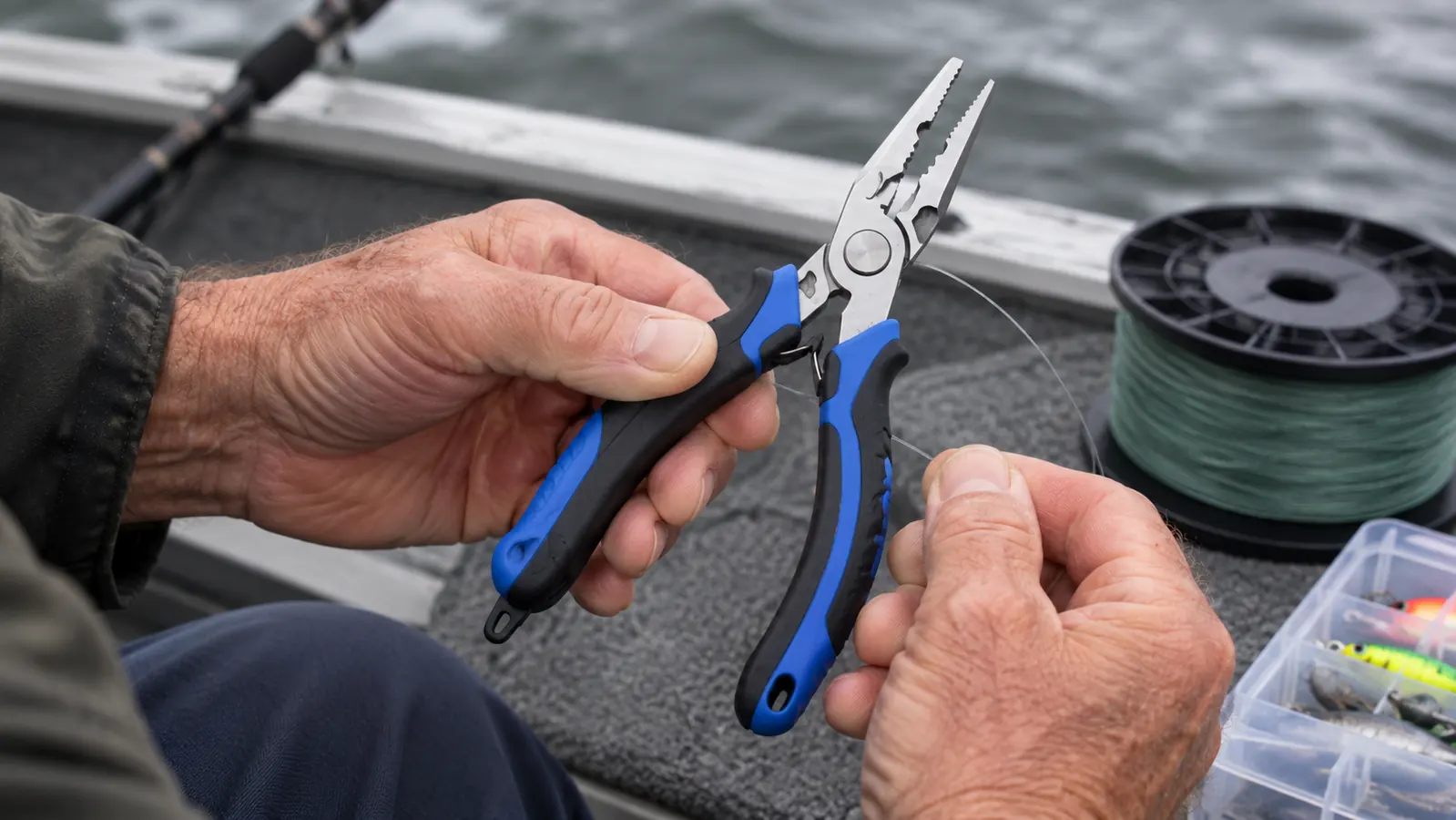
Here is the honest shape of it. The Booms Fishing X1 is an aluminum-handled plier with stainless steel jaws and stainless hardware. It weighs 0.19 kg, which is a touch over six and a half ounces. The handles are a smooth aluminum grip, not a coated one, and the spring is inset into the handle rather than riding outside on the pivot. The braided line cutter is inset into the aluminum. There is a small hook formed at the top of the jaws for working split rings open. It comes with a coiled lanyard and a sheath.
That list is not exciting. It is also the entire basis on which you should decide, so let me translate it into what it means on the water.
The Spring Design Is the Best Decision They Made
An inset spring is the detail I would point at first if someone asked me why these pliers are worth a look. Most cheap pliers run the spring on the outside of the pivot, where it collects line fuzz, weed bits and sand, and where it eventually rusts, snaps, or bends out of shape and stops returning the jaws. Once that spring goes, the pliers are a two-handed tool forever.
Because the spring on the X1 lives inside the aluminum handle, it is shielded from most of what a boat throws at it. Line clippings cannot wrap around a spring they cannot reach. That single choice is why I think these will outlast several pairs of the stamped-steel pliers I used to buy two at a time.
There is a tradeoff, and it is a real one. An inset spring means the handle has to be machined to house it, and that channel is a place where water sits. If you dunk these pliers and then leave them in a closed tray, the water stays in that channel. I dry mine off and leave them open on the bench when I get home. That is thirty seconds of my life and I do not resent it, but a man who tosses his tools in a bucket and forgets them will find rust in places he did not expect.
I keep a small notebook in the boat, mostly for water temperature and what the bass were doing, and once the pliers were broken in I started adding a line about whether the jaws came back open on their own. Over eleven trips from late April into July, they did, every single time. That includes a morning when the air was forty-one degrees and my hands were stiff enough that I fumbled the pliers into the bottom of the boat twice. The spring did not care. The stamped pair I retired would have needed a thumb on the jaw by the second trip out. That is the whole difference between a tool you fight and a tool you use.
Because the spring on the X1 lives inside the aluminum handle, it is shielded from most of what a boat throws at it. Line clippings cannot wrap around a spring they cannot reach.
The Cutters, Judged by a Man Who Cares About Edges
The braided line cutter is inset in the aluminum, and it cuts braid cleanly. That sounds like a low bar. It is not. Braid, especially the slick eight-carrier stuff, will skate across a dull edge and fray instead of parting, and a frayed tag end will not feed through a small hook eye no matter how much you wet it and squint.
What I like about the inset cutter is that the blades are protected. An exposed cutter on the outside of a plier gets nicked on every rock and boat cleat it brushes past, and a nicked edge will not cut line, it will chew it. Because these blades sit down inside the aluminum, they only meet line.
I also ran monofilament through them, and it parts fine. I would not ask them to cut heavy fluorocarbon leader or wire, and as far as I can tell they are not built for that. They are line cutters for braid and mono, and that is what they do. If you need to cut 60-pound leader, carry a separate tool for it and save the edge on these for the fifty cuts a day you actually make.
The test I actually ran was simple. I took a spool of eight-carrier braid, twenty-pound test, sat down at the kitchen table one evening while the coffee went cold, and made fifty cuts in a row. Every one of the fifty parted on the first squeeze with a clean end. The cutter on my retired pliers frayed somewhere around cut fifteen and I spent the rest of that evening re-tying hooks instead of watching the ballgame. Fifty cuts is more than I make in a month of real fishing, so I quit worrying about the edge after that.
The Split Ring Hook and the Jaws
The stainless jaws have a small hook formed at the top. That hook is meant to slip under a split ring and pry it open so you can swap a treble without putting a thumbnail into it. On stubborn rings it does help. I have opened a lot of split rings with a flathead screwdriver over the years, and the hooked jaw is faster and less likely to gouge the ring or my hand.
The jaws themselves are stainless, and they grip a hook shank without slipping. I have removed a 2/0 hook from a smallmouth's jaw with these, and I have pinched down barbs with them, and neither job felt like the tool was straining. Where they fall short is anything requiring real leverage. These are not a substitute for a proper crimper or a heavy-duty hook cutter. The jaws will do what light freshwater work needs and then they will tell you they are done.
Two Things That Genuinely Annoy Me
Now the part most reviews leave out. The coiled lanyard is the weak link in this kit. It is a stretchy plastic coil, and on a plier that is otherwise built like a machined tool it feels like something off a gas station keychain. The coil will stretch a long way, which is nice when your pliers are clipped to your belt and the fish is at the net, but plastic coils get stiff in cold weather and they eventually crack at the connector.
The cold weather problem is not theoretical and I hit it in November. I was out on the pier at South Haven with the air at thirty-eight and a wind coming off the big lake, and the coil had stiffened into something closer to a length of hard tubing than a lanyard. It still stretched, but it did not hang naturally and it kept catching on the edge of my jacket every time I reached for the net. By the time I got home I had cut it off and rigged a short length of paracord with a clip on the end. That took me ten minutes and it has worked better all season.
The sheath is the other one. It is functional and it holds the pliers, and mine has not come apart, but it is not a holster I would trust to keep the tool dry or to survive being stepped on in the bottom of a boat. I swapped mine for a simple belt sheath I already owned, and I do not miss the factory one.
Neither of those is a reason to walk away from the pliers. The head of this tool is worth the money. What I would tell you is to expect to replace the lanyard within a season or two and to decide for yourself whether the sheath works with how you carry gear. If a man buys a decent tool and expects a decent tool, he is fine. If he expects the accessories to match the head, he will be disappointed.
What I Liked
- Inset spring is shielded from line clippings and grit, so the jaws keep returning on their own
- Stainless steel jaws and stainless hardware hold up to repeated wet use
- Inset braided line cutters part slick eight-carrier braid cleanly without fraying
- Hooked jaw top makes split ring swaps fast and keeps fingers out of the ring
- Smooth aluminum handles are light, at 0.19 kg, and comfortable for all day clipping and crimping
Where It Falls Short
- Coiled lanyard is thin plastic and stiffens badly in cold weather
- Factory sheath is basic and will not keep water off the tool
- Inset spring channel holds water if the pliers are stored wet and closed
- Not built for heavy leader, wire, or real leverage work
How It Has Held Up in the Boat
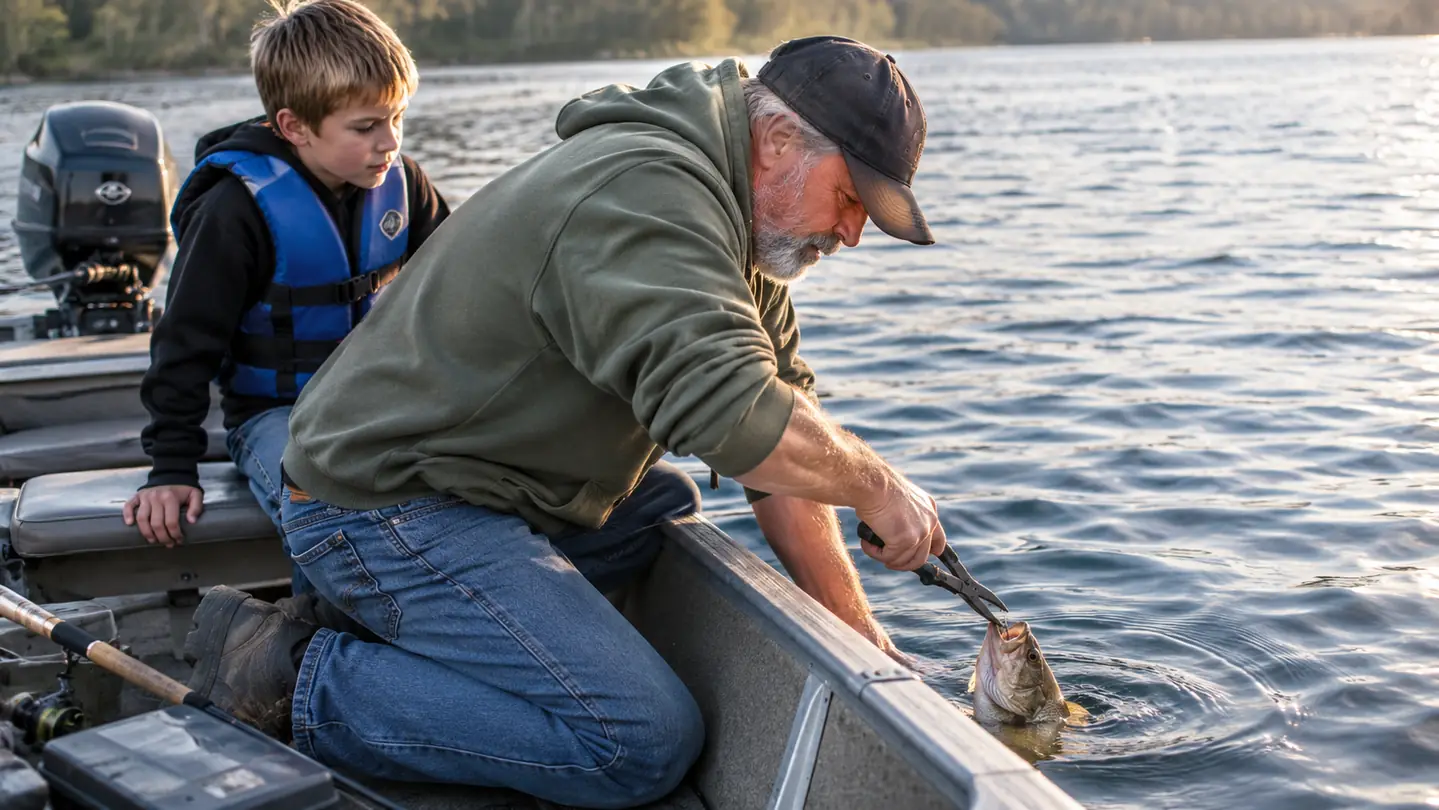
My pliers live in the tray under the middle bench of a fourteen-foot aluminum jon boat, which is about the least forgiving storage on earth. That tray gets lake water in it, sand off my boots, and whatever line clippings I let fall. Most of my fishing is inland lakes for bass and bluegill and crappie, with a nearby river for smallmouth and a few spring and fall trips out to the piers at South Haven.
There was a stretch in June where the boat sat on the trailer for nine days between trips with rain on six of them. I had left the pliers in that tray, closed, because I am not always the man I just told you to be. When I pulled them out the aluminum had water spots and the spring channel held a thin film of rusty water. I wiped it out with a rag, worked the jaws a few times, and it has been fine since. That is the honest version of this tool's maintenance story. It is not rust proof. It is rust resistant if you give it half a chance.
The pliers have been in fresh water and they have been in the big lake, and they have been rained on and left damp. The aluminum handles show scratches, which is what aluminum does and not something I count against the tool. The jaws have a little staining and no rust I have found. The cutter still parts braid on the first squeeze, and the spring still opens the jaws on its own every time.
The pivot is where I watch a pair of pliers most closely, because that is where cheap tools develop the wobble that makes the jaws meet off-center. Mine still close square with no side play worth mentioning. That is the one measurement I actually care about, and it is holding.
Where It Fits and Where It Does Not
These are freshwater pliers for a man who fishes from a boat or from shore and needs to cut line, pop a hook out, pinch a barb, and change a treble. That is ninety percent of what I do with a pair of pliers and this tool handles all of it without complaint. The split ring hook in particular has saved me enough thumbnails that I would miss it if I went back to a flat tool.
If you fish salt exclusively and you are hard on gear, or you are the kind of angler who needs a tool that cuts heavy leader and crimps sleeves, this is not that plier. Buy the heavier tool. Buy it and keep these for line and hooks, because the two jobs are different and pretending otherwise is how you end up with a chewed edge and a bent jaw.
Who This Is For
This is for the weekend angler who is tired of buying two pairs of cheap pliers a season. If you want a light tool with an inset spring, real stainless jaws, and a braid cutter that parts line on the first squeeze, and you are willing to dry it off and hang it up when you get home, this will serve you for years. It is also a sensible first real pair of pliers for someone getting serious about tackle, including a kid fishing with his grandfather, provided the kid is old enough to be trusted with a sharp cutter.
Somebody looking at the Booms Fishing X1 as a gift will find it an easy one to give. It arrives with the sheath and the lanyard, it feels substantial in the hand, and it does not look or feel like a cheap tool even though it is a modest one.
Who Should Skip It
Skip it if you need one tool to do everything, because this does a narrow set of jobs well and refuses the rest. Skip it if you are the kind of person who will not maintain a tool, because the inset spring channel rewards a man who dries his gear. And skip it if the accessories matter to you as much as the head does, because the lanyard and the sheath are the weakest parts of what comes in the package.
If you already own a solid pair of saltwater pliers and you are happy with them, there is no reason to change. Nothing here is so different that it justifies replacing a tool that works.
The Honest Summary
I came into this expecting to find a stamped tool with a shiny finish and I found a decent one instead. The Booms Fishing X1 has a properly machined feel at the pivot, a shielded spring, a protected cutter, and stainless jaws that grip what they are asked to grip. It is not perfect. The lanyard is cheap, the sheath is basic, and the tool needs a wipe down that a cheaper plier would not.
That is a fair trade in my book. I would buy these again, and I would tell a friend at the bait shop counter to buy them, with the same two warnings I just gave you. Buy the pliers. Plan on replacing the lanyard. Dry them off when you get home.
The pliers I would tell a friend to buy, with the two warnings attached
Aluminum handles, stainless jaws, inset braid and mono cutters, split ring hook, coiled lanyard and sheath. 4.6 stars from 2,846 Amazon reviews.
Amazon Check Today's Price on Amazon →