

A 14-foot aluminum jon boat gives you two seats, a small trolling motor, and about four square feet of floor you can reach without stepping on something. That is the whole storage budget, and it does not grow. Most of us spend it on one deep box, then spend the morning rooting through that box while a fish busts a topwater three casts away. The box is not the villain. The trouble is that a deep box stacks everything on top of everything else and then dares you to remember which compartment the 1/0 hooks went into back in April.
I fished out of that same boat for years and got used to the digging. What finally fixed it was not a bigger box, and it was not a fancier one. It was smaller trays that fit the boat instead of asking the boat to fit them. The KastKing Utility Tackle Boxes are what I settled on, and the 2-pack of 3600 trays is the reason I stayed with them. Each tray measures about 10.8 by 7.25 by 1.65 inches, so it sits flat on the bench beside my knee instead of standing up and skating around every time I shift my weight.
Two trays that fit the floor of a jon boat, not the other way around
The KastKing 2-pack of 3600 trays: pre-cut dividers, 3 to 18 adjustable compartments per tray, built to drop into standard tackle bags. Load them at the tailgate and set them flat on the bench.
Amazon Check Today's Price on Amazon →Step 1: Empty the boat on the tailgate before you touch a single tray
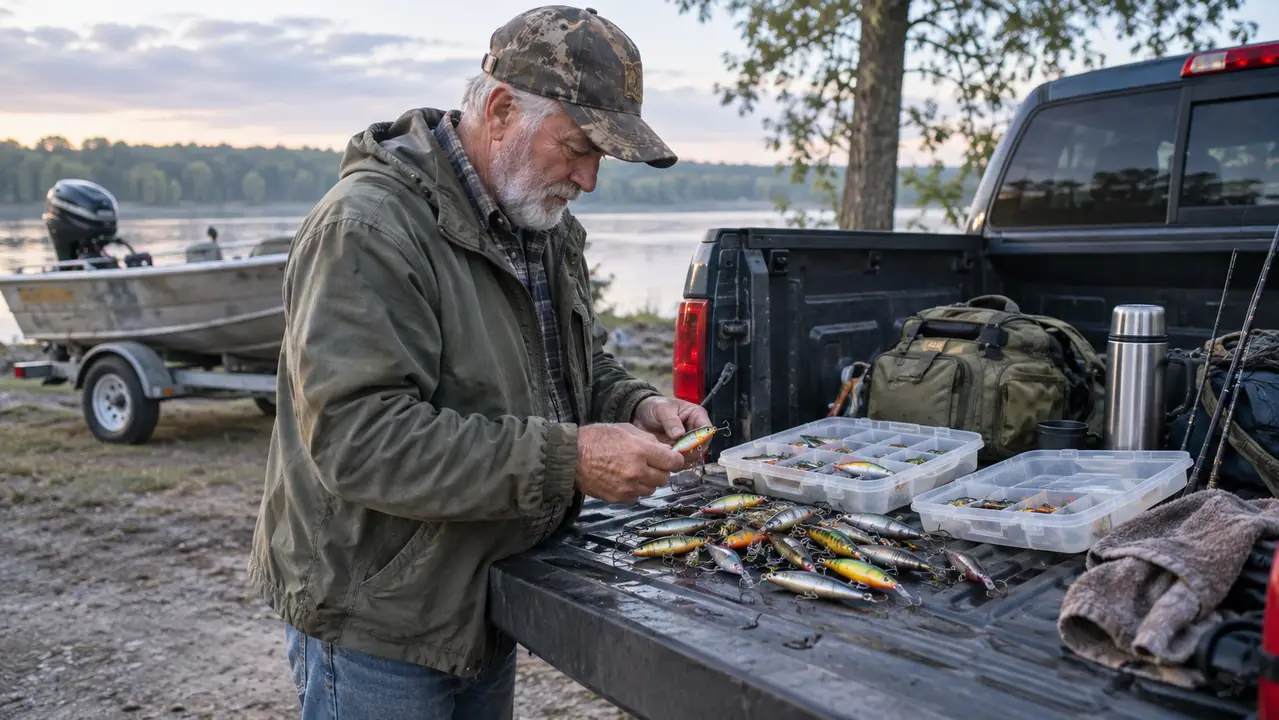
Do this at the truck, not in the boat. Pull everything out and lay it on the tailgate in one pile: every box, every loose bag of plastics, the sandwich bag of hooks you have been carrying since April, all of it. You cannot organize what you cannot see, and a good half of what rides in a jon boat is gear that migrated out of a box months ago and never found its way back. Get it into daylight where you can look at it.
Then sort into four piles. Hard baits. Soft plastics. Terminal tackle, meaning hooks, weights, swivels and beads. And the fourth pile, the one nobody admits to: the gear you carry because you are afraid to leave it home. A depth weight you used twice. Six colors of the same crankbait. Two spools of line you will never re-spool with wet hands in a moving boat. Be honest about that pile, because it is usually the biggest one on the tailgate.
If it has not been wet in two seasons, it does not earn a compartment. That one rule cleared more room in my boat than any new box ever did, and it is the reason two shallow trays now hold what a deep box used to hold, with a lot less cursing and a lot fewer hooks in the thumb. Set the rejects in a bucket and deal with them at home, not on the water.
Step 2: Set the dividers while the tray is still empty
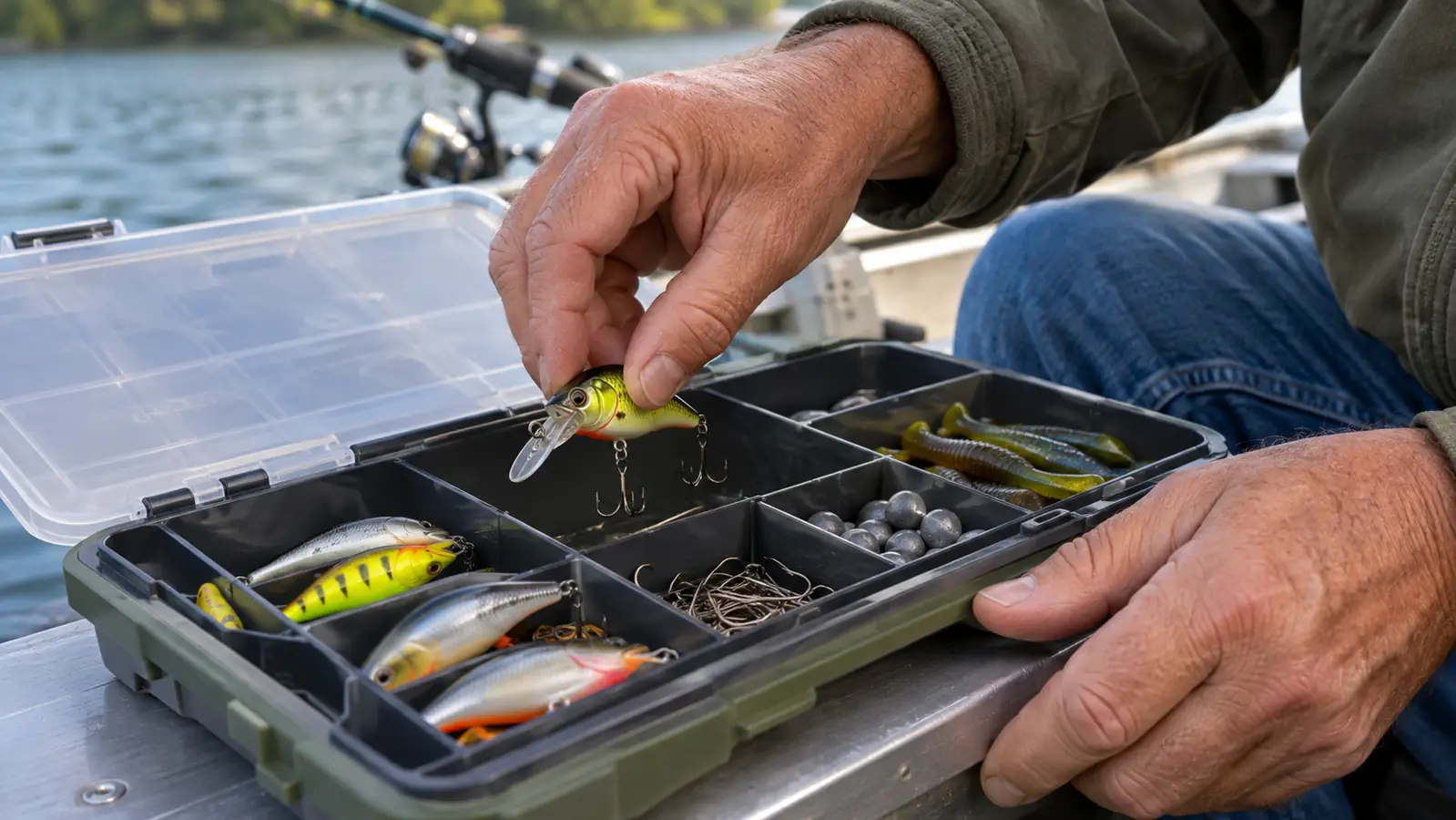
The KastKing trays come with pre-cut dividers, and the compartment count runs anywhere from 3 to 18 per tray depending on where you slot them. Set them up empty, on a flat bench, before a single bait goes in. Once a tray is loaded you will not pull it apart to fix a divider. You will live with a slot that is two inches too long for anything you own, and you will live with it for three seasons, because re-sorting feels like work and fishing feels like Saturday.
Think about how the bait comes out, not just how it goes in. Crankbaits want a long narrow compartment so the trebles are not married to each other. Jig heads and worm weights want small square cells so they cannot roll into a corner and hide. Soft plastics want one wide slot, because you will pull eight of them out looking for the right color whether the tray is organized or not, and a wide slot at least keeps them from becoming a nest.
Leave one compartment empty on purpose. Something will not fit the plan, usually a chatterbait or a swimbait you bought on a whim, and having a hole ready beats cramming it in with the crankbaits and untangling trebles at first light with cold hands and a fish already blowing up on the far side of the boat. One empty cell costs you nothing and saves you a ten-minute knot job.
Step 3: Load each tray for one job, not one species
This is where most guys go sideways. They build a bass tray, a bluegill tray and a crappie tray, then discover they need all three on a two-hour trip and end up carrying the whole shelf anyway. Build by job instead of by species, because the job is what changes during the day. You start the morning throwing moving baits and you end it dragging plastics, and the tray should follow that rhythm instead of fighting it.
My working tray holds two or three crankbaits, a couple of spinnerbaits, a topwater, and the hooks and split rings to fix them. It stays open on the bench. The swap tray holds soft plastics in three or four colors, jig heads, worm weights, swivels and a small pack of spare hooks. That is the tray I open when the bite changes or when something gets destroyed on a snag. Two trays, two jobs, no digging in either one.
Terminal tackle is where a tray earns its keep. Small compartments hold a season of hooks and weights and keep them separated, so you are not picking a 1/0 out of a 3/0 pile while the wind walks you into the dock. Watch the load, though. KastKing rates the tray to a maximum of three pounds, and a tray packed tight with lead jigs gets there faster than you would guess. Heft it in your hand before you close it up.
Eighteen small cells beat one big open box, and not because the plastic is better. Because I can see every hook I own without dumping the whole thing into the bottom of the boat.
Step 4: Put the trays where your hand falls, not where they fit
The bench layout on a 14-foot jon boat is fixed, so the trays go where your right hand lands naturally when your left is holding a rod. For me that is the bench beside my knee, sitting flat, top open, facing me. Not under the seat. Not in the bow. Not behind me, where reaching for a hook means turning my whole body and losing a cast in the process.
The trays are shallow enough to sit side by side without one burying the other, and the 3600 size is built to be interchangeable with standard tackle bags. So the tray that rides in the boat drops straight into a soft bag for a shore day on the river. One set of trays, two ways to carry them, no repacking between Friday night and Saturday morning when you would rather be sleeping.
Anything you touch less than once an hour goes in the second row or stays in the bag. Anything you have touched twice in ten minutes stays open on the bench. When my grandson Tyler is along on a summer Saturday, that open tray also has to survive a twelve-year-old reaching across it for a snack, so nothing sharp sits on the near edge and the loose hooks stay in a closed compartment.
Step 5: Plan for splash, rain, and the three-pound limit
The trays are listed as waterproof and the plastic shrugs off a wet bench, but nothing stays dry while it sits in an inch of bilge water. On a jon boat, water arrives from three directions: rain, splash over the bow, and the steady drip off every bait you drop back in. Keep the trays up on the bench and off the floor, and empty the bilge before you launch instead of after.
Rain is the real test. A summer storm on an inland lake in southwest Michigan can go from blue sky to sideways in ten minutes. When it does, the trays go under the bench, the rod tips go down, and we run for the ramp. Gear that was already sorted survives that kind of afternoon. Loose hooks in a wet box turn into a rust experiment by the next weekend, and you end up replacing tackle you already owned.
Keep the weight honest. Three pounds per tray is the rated maximum, so the lead lives in the swap tray and the working tray stays light. A boat this size does not need fifty pounds of tackle in it. A tray you can palm one-handed is a tray you will put back where it belongs at the end of the day instead of leaving it open on the bench for the ride home.
What I Got Wrong the First Two Seasons
I started with one tray loaded for everything and a second tray kept empty for the day the first one filled up. That never worked. An empty tray stays empty, and a tray loaded for everything is a tray you dig through. The fix was deciding what each tray was for before the season started, then refusing to let anything else into it no matter how promising it looked in the store aisle.
The other mistake was sorting by brand and color instead of by size. It looks neat on the garage floor and it is useless on the water, because on the water you are not thinking about brands. Group lures by how you fish them and terminal tackle by size, and the tray starts answering questions instead of creating them.
Last thing I got wrong: I left the trays in the boat between trips. Sun, heat and a little splash will do a number on soft plastics and hook points over a summer. Now the trays come inside at the end of the weekend, get wiped out, and go back to the boat on Friday night with everything where it belongs.
What Else Helps
Two cheap habits around the trays do as much as the trays. Keep side cutters and a hook hone in the working tray, not in a bag under the seat, because the moment you need a cutter is the moment you cannot dig for one. And wipe the trays out after every trip. Soft plastics leak oil and scent, and a tray that sat in a hot boat all week smells like a bait shop floor.
Test the layout in the driveway before you trust it. Load both trays, carry them out to the boat, and set them where you plan to keep them. Sit down. Reach for a hook. Reach for a worm weight. If you have to lean or twist, the tray is in the wrong spot, and you will figure that out a lot cheaper in the driveway than with a fish on and the wind pushing you toward the dock.
If you want more room later, the same line comes in 3700 trays, the next size up, and those are built to drop into standard bags the same way. On a 14-foot boat I would not go bigger than the 3600 for the tray that sits on the bench. The larger one is fine for the bag that lives in the truck, but on the bench it starts crowding the floor you need for your feet.
Sorted at the tailgate means more casts on the water
The KastKing Utility Tackle Boxes come as a 2-pack of 3600 trays with pre-cut dividers and 3 to 18 adjustable compartments each, sized to fit standard tackle bags. Load once, keep them flat on the bench, stop digging.
Amazon Check Today's Price on Amazon →